Geotechnical laboratory testing forms the backbone of safe and economical construction across Boise and the Treasure Valley. The Laboratory category encompasses a suite of standardized soil and rock characterization procedures that transform field samples into reliable engineering parameters. From routine index tests to advanced shear strength evaluations, these analyses provide the quantitative data that geotechnical engineers need to design foundations, retaining walls, pavements, and earthworks that perform reliably over decades. In a region experiencing sustained population growth and urban expansion, laboratory testing ensures that development proceeds on a foundation of verifiable material properties rather than assumptions.
Boise's geologic setting presents unique challenges that make laboratory testing particularly critical. The city sits near the boundary between the Idaho Batholith foothills to the north and the western Snake River Plain to the south, creating a transition zone of decomposed granite, alluvial fan deposits, and lacustrine sediments from ancient Lake Idaho. Many project sites encounter expansive clay layers within the Glenns Ferry Formation or loose, collapsible silts in lower-lying areas near the Boise River. A thorough laboratory program, including grain size analysis (sieve + hydrometer), allows engineers to differentiate between these problematic soils and more competent materials, directly influencing foundation type selection and earthwork specifications.
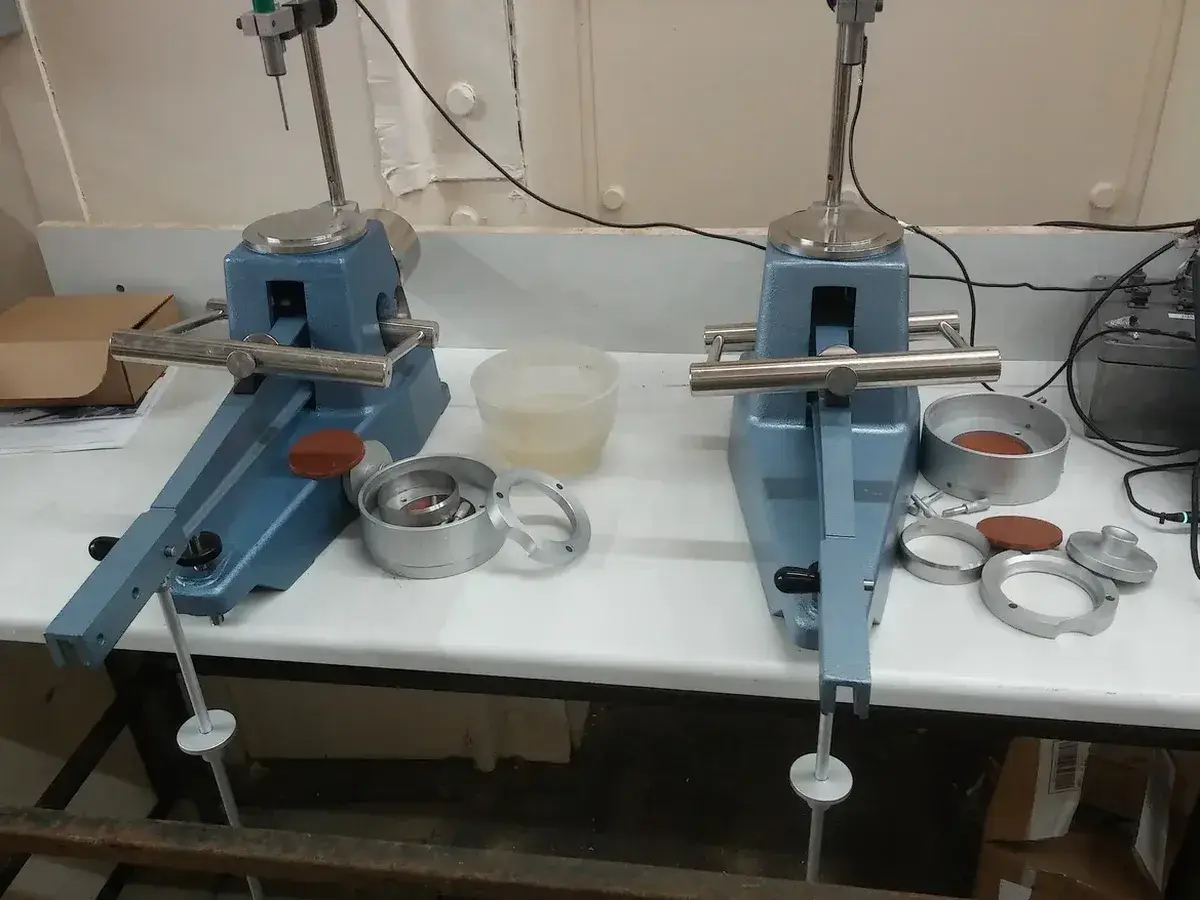
All laboratory testing performed for Boise projects must comply with ASTM International standards, which have been adopted by reference in the International Building Code (IBC) as enforced by the City of Boise Planning and Development Services Department. Key standards include ASTM D422 for particle-size analysis, ASTM D4318 for Atterberg limits, and ASTM D1557 for modified Proctor compaction. Idaho-specific amendments to the IBC, along with AASHTO specifications for transportation projects administered by the Idaho Transportation Department (ITD), further define required testing frequencies and acceptable criteria. Adherence to these standards is not optional; it constitutes the legally defensible basis for design recommendations and regulatory submittals.
Projects throughout Boise that routinely require comprehensive laboratory testing span multiple sectors. Commercial developments in the downtown core often involve deep excavations where accurate shear strength parameters from consolidated-undrained triaxial tests govern shoring design. Residential subdivisions in southeast Boise and Meridian require swell-consolidation testing to quantify expansive soil behavior and inform moisture-conditioned structural floor systems. Municipal infrastructure, including the city's ongoing wastewater treatment plant upgrades and arterial roadway widenings, depends on compaction testing and California Bearing Ratio (CBR) values to validate subgrade preparation. Even smaller-scale retaining wall replacements in the Boise Bench area benefit from index property testing that confirms backfill suitability and drainage characteristics.
Available services
Common questions
What laboratory tests are typically required for a standard foundation design in Boise?
A typical foundation design program includes moisture content, Atterberg limits, grain size analysis with hydrometer, and unconfined compressive strength for cohesive soils. If expansive clays from the Glenns Ferry Formation are suspected, swell-consolidation testing is added. For granular soils, direct shear tests may replace unconfined compression. The specific suite depends on the encountered stratigraphy and the structural loads, but these index and strength tests form the minimum defensible basis for bearing capacity and settlement calculations under IBC Chapter 18.
How do ASTM standards apply to geotechnical laboratory testing in Idaho?
ASTM standards are legally binding in Idaho through their adoption by the International Building Code, which the City of Boise enforces. Every test method—from sample preparation to final calculations—must follow the prescribed ASTM procedure. For transportation work, AASHTO standards govern, though many mirror ASTM methods. Laboratories must maintain current versions of these standards, calibrate equipment per specified intervals, and document compliance. Non-ASTM results are generally not accepted for regulatory submittals and offer limited legal defensibility.
Why is grain size analysis important for Boise construction projects?
Grain size analysis, combining sieve and hydrometer methods, classifies soils according to the Unified Soil Classification System, which directly correlates to engineering behavior. In Boise's alluvial and lacustrine deposits, this test distinguishes free-draining sands from impermeable silts and clays, informing drainage design, frost susceptibility assessments, and liquefaction potential evaluations. It also provides critical input for filter design in retaining walls and underdrains, where compatibility between native soil and imported aggregate prevents internal erosion failures.
What quality assurance procedures should a geotechnical laboratory follow?
A credible laboratory follows a documented quality assurance program including equipment calibration at ASTM-specified frequencies, participation in proficiency testing programs such as those offered by AASHTO re:source, and maintenance of chain-of-custody documentation for all samples. Internal blind duplicate testing and periodic technician competency evaluations are standard practice. For Boise projects, the laboratory should also be familiar with local geologic units to identify anomalous results that may indicate sampling disturbance or testing errors requiring re-analysis.