You see it all the time around Boise—a contractor breaks ground near the Bench and hits unexpected river cobbles at six feet, or finds the water table perched way higher than anyone guessed. That's the thing about the Treasure Valley: the ground has memory. From the ancient Lake Idaho deposits under downtown to the granite foothills near Table Rock, subsurface conditions shift dramatically within a single job site. A proper SPT program cuts through the guesswork. We run standardized penetration tests that give you blow counts, soil samples, and a clear picture of what's actually down there before your excavators show up. Pairing this data with a grain-size analysis helps confirm the silty sands that dominate much of the Boise plain, while a liquefaction assessment becomes non-negotiable anywhere near the river corridor where saturated granular soils meet our seismic reality.
In Boise's alluvial soils, N-values below 10 in the upper 30 feet aren't a minor note—they're a foundation redesign waiting to happen.
Our approach and scope
Local ground factors
We've seen it happen more than once: a developer in Meridian or West Boise skips the SPT scope to save a few days on the pre-construction schedule, only to discover during excavation that the 'competent gravel' shown on an old county map is actually loose silt with organic lenses down to 15 feet. Now the foundation contractor is on standby, the structural engineer is scrambling to revise bearing capacity assumptions, and the project has burned two weeks of schedule float before a footing is poured. The IBC—specifically Chapter 18—doesn't leave much wiggle room here. Without site-specific penetration data, your allowable bearing pressures default to conservative table values that can inflate footing dimensions by 30 to 40 percent. A targeted SPT investigation costs a fraction of that concrete overrun, and the liability picture is night and day if something goes wrong later.
Relevant standards
The Standard Penetration Test is performed in accordance with ASTM D1586-18, while seismic site classification utilizes N-values per ASCE 7-22, foundation design follows IBC 2021 Chapter 18, and soil classification adheres to ASTM D2487-17.
Other technical services
Standard SPT Boreholes
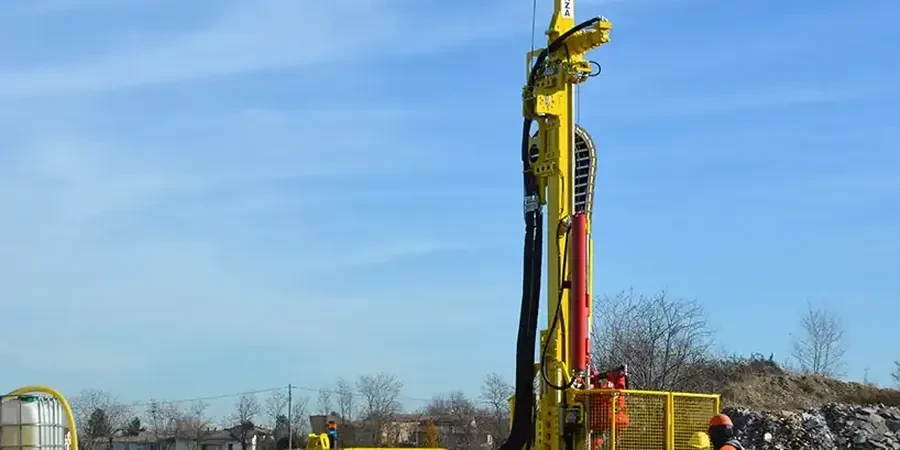
Truck-mounted CME rigs for depths up to 100 feet. We log every run, photograph samples, and ship selected material for index testing. Typical spacing follows IBC Table 1803.1 recommendations.
Liquefaction Assessment with SPT
Using the Youd-Idriss (2001) NCEER methodology, we compute factor of safety against liquefaction for Boise's mapped seismic hazard. Critical for any structure in Site Class D or E near the river.
Preliminary Foundation Recommendations
We deliver N60-corrected blow counts, estimated bearing capacity, and anticipated settlement ranges so your structural team can move forward with confidence during schematic design.
Seismic Site Classification
SPT data feeds directly into Vs30 estimates and ASCE 7 site class determination, which controls your seismic design category and base shear calculations.
Typical parameters
Common questions
What does an SPT test actually cost in the Boise area?
How many SPT borings does the city or county require for a commercial building?
Boise follows IBC Table 1803.1, which starts at one boring per 2,500 square feet of building footprint for structures under 10,000 square feet, with a minimum of two. Larger footprints, irregular loading, or variable subsurface conditions can require additional borings. The building official has final say, and we help you scope the investigation to meet plan check expectations the first time.
Can you drill through basalt or cobbles near the Boise foothills?
Yes, but it changes the approach. When we encounter basalt float or dense cobble layers—common along the Bench and near Table Rock—we switch to rock coring or use a heavy-duty rotary rig. The transition depth gets documented carefully because it affects both foundation type and excavation cost estimates.
How long does it take to get SPT results back?
Fieldwork for a typical Boise site takes one to two days. We deliver a preliminary factual report with boring logs and N-values within five to seven business days. If your structural engineer needs data faster, we can turn around a summary email with key parameters within 48 hours of completing the field program.
Do I really need SPT if my neighbor's house was fine with just a soil report?
Residential projects on the Boise Bench sometimes get by with prescriptive foundation designs based on county soil maps, but that approach doesn't scale to commercial or multi-family work. More importantly, soil conditions in alluvial valleys can change dramatically across a property line. An SPT gives you defensible, site-specific data that satisfies the building code and protects your investment if conditions turn out worse than the neighbor's lot.