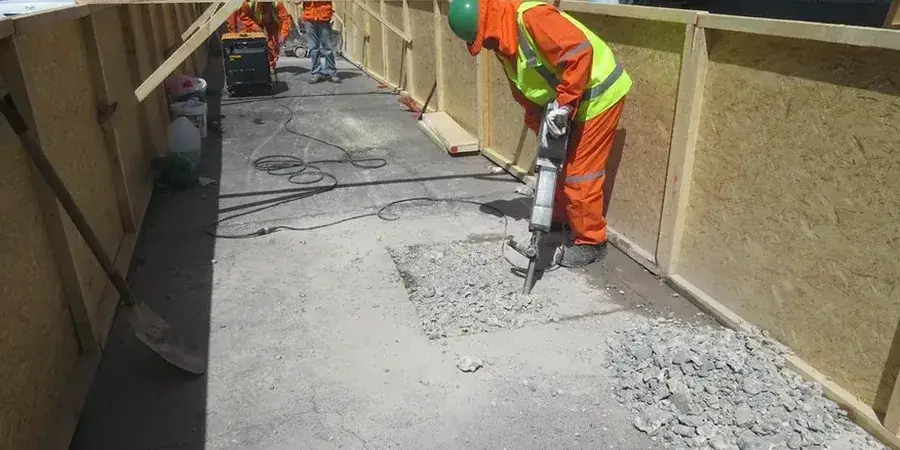
Boise’s growth hasn’t been subtle. The city added over 15,000 residents just between 2020 and 2022, pushing construction into areas where the subsurface hasn’t been mapped in decades. That’s a problem if you’re breaking ground without knowing what’s two feet down. An exploratory test pit in Boise gives you that direct look. You see the soil profile. You identify fill zones, cobble layers, or perched groundwater before they become change orders. Our team logs every pit per ASTM D2487 and correlates findings with Boise’s variable geology—from the lacustrine sediments near the river to the decomposed granite up in the foothills. When trenching near existing utilities or planning basement excavations in the North End, the visual confirmation from a test pit eliminates guesswork. We combine this data with in-situ permeability testing when drainage is a concern.
A two-hour pit excavation in Boise often reveals more about site stratigraphy than a dozen core samples—because you see the soil in its undisturbed context.
Our approach and scope
Local ground factors
Boise’s population has doubled since 1990, and the city now houses over 235,000 people. That density means more trenching near old foundations, more utility corridors, and more surprises underground. Skipping an exploratory test pit in Boise is a roll of the dice. We’ve seen projects where a three-foot layer of undocumented debris fill under a proposed footing pad turned a two-week job into a two-month dispute. Our pits locate that risk early. We document the fill thickness, photograph the material, and recommend over-excavation limits before the structural engineer finalizes the foundation design. In areas near the Boise River with high water tables, a test pit also reveals the seasonal groundwater level—critical for basement waterproofing design. The OSHA Subpart P soil classification we provide from each pit is the same documentation the site safety officer needs for trench protection planning.
Relevant standards
The exploratory test pits comply with ASTM D2488 for visual-manual soil description, ASTM D2487 for the Unified Soil Classification System, IBC Chapter 18 for soils and foundations, and OSHA 1926 Subpart P for excavation safety.
Other technical services
Stratigraphic Logging & Photography
Complete visual soil description per ASTM D2488. Each layer is photographed with a scale and logged for color, moisture, plasticity, and structure.
OSHA Soil Classification
We classify the exposed material as Type A, B, or C per OSHA 1926 Subpart P. This documentation is required before any trench work deeper than 5 feet.
Utility & Fill Verification
Direct observation of undocumented fills, old foundation remnants, or shallow utility lines. We flag conflicts before the excavator bucket finds them.
Typical parameters
Common questions
How much does an exploratory test pit cost in Boise?
Do I need a test pit if I already have a geotechnical boring log?
Often yes. A boring gives you a vertical column—it misses lateral changes. A test pit in Boise lets you see how gravel lenses pinch out or how fill thickness varies across the pad. For shallow foundations under 4 feet, a pit is frequently more useful than a deep boring.
How soon can you get a test pit crew to a site in Boise?
We typically schedule pits within 3–5 business days for most Boise locations. Same-week service is common during the construction season from March through November. The field report with photos and soil classification is delivered within 24 hours of the excavation.