Boise grew fast after the Morrison-Knudsen era and the tech migration of the 2000s, pushing development onto benchlands and old river terraces that don't always behave the way they look. The Treasure Valley sits on a mix of Quaternary alluvium, basalt flows, and wind-deposited loess — a combination that keeps shallow foundation design honest. When you're working with a 4-ft frost depth and a site class that swings between C and D depending on where you drill, the numbers on the geotech report matter more than the square footage. Our lab runs the grain size distribution and Atterberg limits on every sample so the bearing stratum isn't guessed from the surface, and we correlate the results with the USDA soil survey for Ada County to catch expansive clay before the concrete is poured.
In Boise, the difference between a 24-inch and a 30-inch footing often comes down to five points of silt content and the groundwater level in March.
Our approach and scope
- Footing width optimization using CU triaxial data from undisturbed Shelby tube samples.
- Mat foundation feasibility when column loads exceed 300 kip and the site sits on interbedded clay lenses.
- Compaction verification per ASTM D1557 at the bearing elevation before rebar placement.
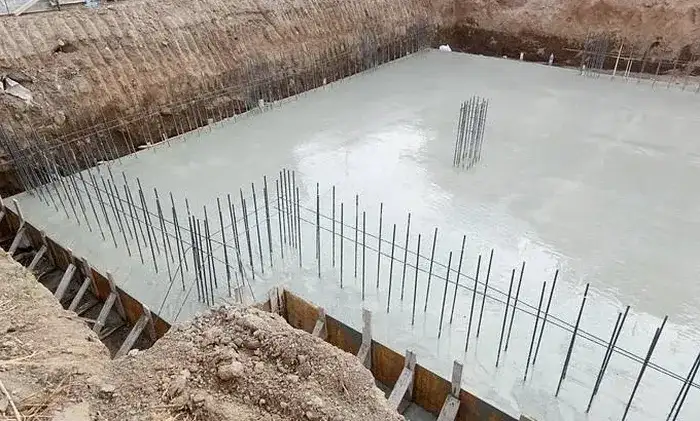
Local ground factors
The basalt is shallow in the Boise foothills — sometimes less than three feet — and that creates a hard boundary that concentrates stress under a spread footing if the overlying soil is loose or poorly graded. On the south side of the river, the water table can rise to within four feet of grade during spring runoff, which drops the effective stress and introduces collapse potential in silty layers. The 2020 M6.5 Stanley earthquake was a reminder that Boise sits in an active seismic corridor, and IBC Chapter 18 requires a liquefaction screening when the water table is within 50 feet. Even a simple strip footing design needs a settlement check against the differential movement that expansive clays produce — something we measure directly with the Atterberg limits and the percent passing #200 sieve.
Relevant standards
ASTM D2487 classifies soils for engineering purposes under the Unified Soil Classification System, while IBC 2021 Chapter 18 governs soils and foundations, and ASCE 7-22 specifies minimum design loads for buildings. ASTM D1586 defines the standard test method for the Standard Penetration Test and split-barrel soil sampling.
Other technical services
Spread Footing & Mat Foundation Design
Bearing capacity analysis using SPT blow counts and undrained shear strength from CU triaxial tests. Settlement calculations for both immediate and consolidation settlement on the silty clays common in the Treasure Valley.
Soil Characterization & Expansive Clay Screening
Atterberg limits, hydrometer analysis, and moisture-density relationships to flag expansive soils before footing design. We sample at the bearing elevation and at depth to map the active zone.
Typical parameters
Common questions
How much does a shallow foundation design study cost for a typical Boise residential lot?
What is the frost depth requirement for footings in Boise?
The IBC and Boise city code require a minimum footing depth of 24 to 30 inches below finished grade to get below the frost line. On exposed sites or in unheated structures, we sometimes recommend 36 inches based on the soil's thermal conductivity and the historic frost penetration data.
Do you test for expansive clays in the Boise area?
Yes. We run Atterberg limits on every sample and report the plasticity index and percent passing the #200 sieve. If the PI exceeds 15 and the fines content is above 50%, we flag the soil as potentially expansive and provide recommendations for moisture conditioning, over-excavation, or a structural floor system.