Drive from the basalt-lined streets of the North End down toward the river terraces near Barber Park and the ground changes fast. That transition from shallow bedrock to deep alluvial deposits is where most of Boise’s tunnel headaches begin. The city sits on a mix of Quaternary gravels, sands, and silts washed down from the Boise Front, and what looks like competent material from the surface can turn into running ground just a few feet down. For a tunnel alignment crossing these deposits, standard site investigation isn’t enough. You need a focused soft-ground analysis that maps the transition zones, quantifies pore-pressure response, and predicts how the face will behave under the groundwater conditions common in the Treasure Valley. Before committing to a TBM or sequential excavation method, we pair our CPT testing with continuous sampling to build a reliable geotechnical model that doesn’t rely on guesswork.
Soft-ground tunneling in Boise is a race between face stability and pore-pressure equalization—get the geotechnical model wrong and you’ll find out within the first fifty feet.
Our approach and scope
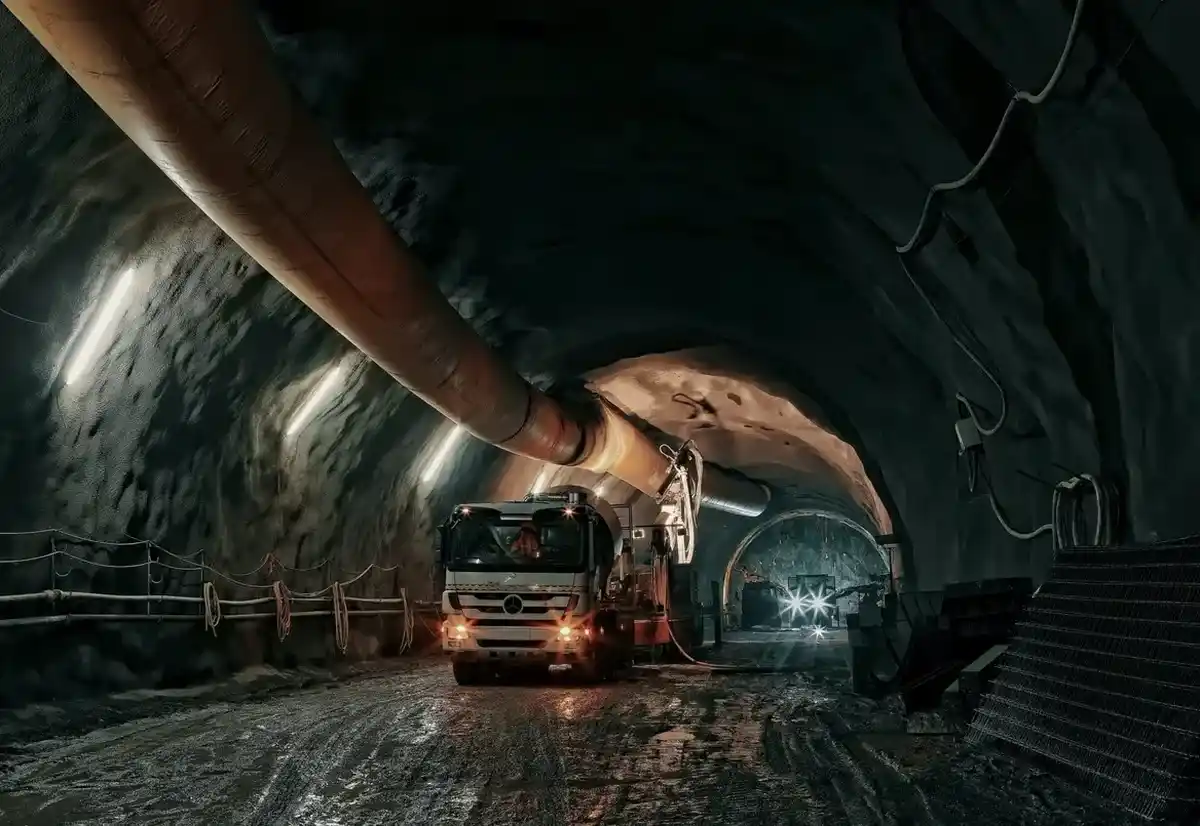
Local ground factors
The rig that shows up on a soft-ground tunnel job in Boise usually isn’t a standard truck-mounted drill—it’s a track-mounted CPT unit or a sonic drill capable of pushing continuous core through loose silts without washing out the fines. These machines let us capture thin clay seams and liquefiable sand lenses that a hollow-stem auger would miss entirely. The biggest risk in the Treasure Valley isn’t just low stand-up time; it’s the unpredictability of the river deposits. A five-foot shift in the alignment can mean the difference between stable face conditions and a chimney collapse that propagates to the surface. That’s why our reports include explicit face-support recommendations—whether it’s forepoling, spiling, or full-face grouting—and tie them directly to the soil units encountered in the borehole logs. We also flag any zones where grouting ahead of the face will be necessary to control inflows before the lining is in place.
Relevant standards
ASTM D1586 – Standard Test Method for Standard Penetration Test (SPT) and Split-Barrel Sampling of Soils, ASTM D2487 – Standard Practice for Classification of Soils for Engineering Purposes (Unified Soil Classification System), ASCE Guidelines for Geotechnical Baseline Reports for Underground Construction, FHWA-NHI-09-010 Technical Manual for Design and Construction of Road Tunnels
Other technical services
Pre-Bid Geotechnical Baseline Report
A complete GBR package for design-build or DBB tunnel projects, including borehole logs, lab test results, interpreted soil profiles, and baseline parameters for face-support pressure, settlement, and groundwater inflow. We follow ASCE GBR guidelines and coordinate with your legal team on differing site conditions clauses.
Face Stability and Stand-Up Time Analysis
Using limit-equilibrium wedge models and numerical methods calibrated to Boise River alluvial soils, we deliver explicit stand-up time curves and minimum required face-support pressures for each reach of the alignment. Outputs feed directly into TBM operating parameters or SEM round-length decisions.
Construction-Phase Verification and Monitoring
During tunneling, we run laboratory confirmation testing on muck samples, compare actual face conditions to baseline predictions, and adjust support recommendations in real time. We also install and read settlement points, inclinometers, and piezometers to protect adjacent infrastructure in downtown Boise.
Typical parameters
Common questions
What soil conditions in Boise make soft-ground tunneling difficult?
The Boise River has deposited highly variable sequences of sand, silt, and gravel across the valley. Tunneling below the water table often encounters saturated, loose-to-medium-dense sands with low stand-up time. Interbedded silt seams can trap water and create unstable face conditions. A detailed geotechnical investigation—SPT borings, CPTu soundings, and lab index tests—is essential to map these transitions before selecting a tunneling method.
Do you provide Geotechnical Baseline Reports for tunnel projects in Idaho?
Yes. We prepare GBRs following ASCE guidelines, tailored to the subsurface conditions of the Treasure Valley. The report includes baseline soil parameters, groundwater levels, boulder occurrence, and anticipated face behavior. We work with your design team and legal counsel to define clear baselines that reduce contractor contingency and minimize disputes during construction.
What does a soft-ground tunnel geotechnical analysis typically cost in the Boise area?
For a tunnel project in the Boise area, a comprehensive soft-ground geotechnical analysis typically ranges from US$4,280 to US$16,550 depending on the length of the alignment, number of borings or CPT soundings required, and the complexity of the lab testing program. A firm quote follows a review of the project plans and site access conditions.