The Treasure Valley contains extensive deposits of silty loess and lacustrine clays, particularly near the Boise River floodplain and the Lake Bonneville shoreline. These fine-grained soils exhibit moderate to high plasticity, making Atterberg limits testing essential for any foundation design in Boise. Our laboratory performs ASTM D4318-17e1 testing to determine liquid limit, plastic limit, and plasticity index — the three parameters that govern shrink-swell behavior and shear strength. The USCS classification derived from these tests directly feeds into bearing capacity calculations and pavement subgrade ratings. For projects where the fines content is borderline, we pair this with grain size analysis to confirm the silt-clay split. Boise's semi-arid climate means moisture contents fluctuate sharply between summer and winter, and the plasticity index tells us exactly how much volume change to expect.
A plasticity index of 15 or higher in Boise's silty loess means the difference between a standard footing and an engineered fill replacement.
Our approach and scope
Local ground factors
A five-story mixed-use building on Fairview Avenue near the connector showed distress within 18 months of completion. The geotechnical report had classified the site soils as low-plasticity silt based on visual classification only. No Atterberg testing was performed. Core samples we analyzed post-failure revealed a PI of 28 — a highly plastic clay layer at 4-foot depth that expanded during winter moisture increase, lifting the slab-on-grade by over an inch. The repair cost exceeded $200,000. This is not hypothetical. Boise's Lake Bonneville sediments contain montmorillonite clays with very high activity. Without Atterberg limits data, the USCS classification is incomplete, and the structural engineer designs blind. Our laboratory runs these tests daily for a reason: the plasticity index is the single most predictive value for volume change potential in fine-grained Treasure Valley soils.
Relevant standards
ASTM D4318-17e1, ASTM D2487-17e1, AASHTO T 89-13, AASHTO T 90-16
Other technical services
Liquid Limit & Plastic Limit Determination
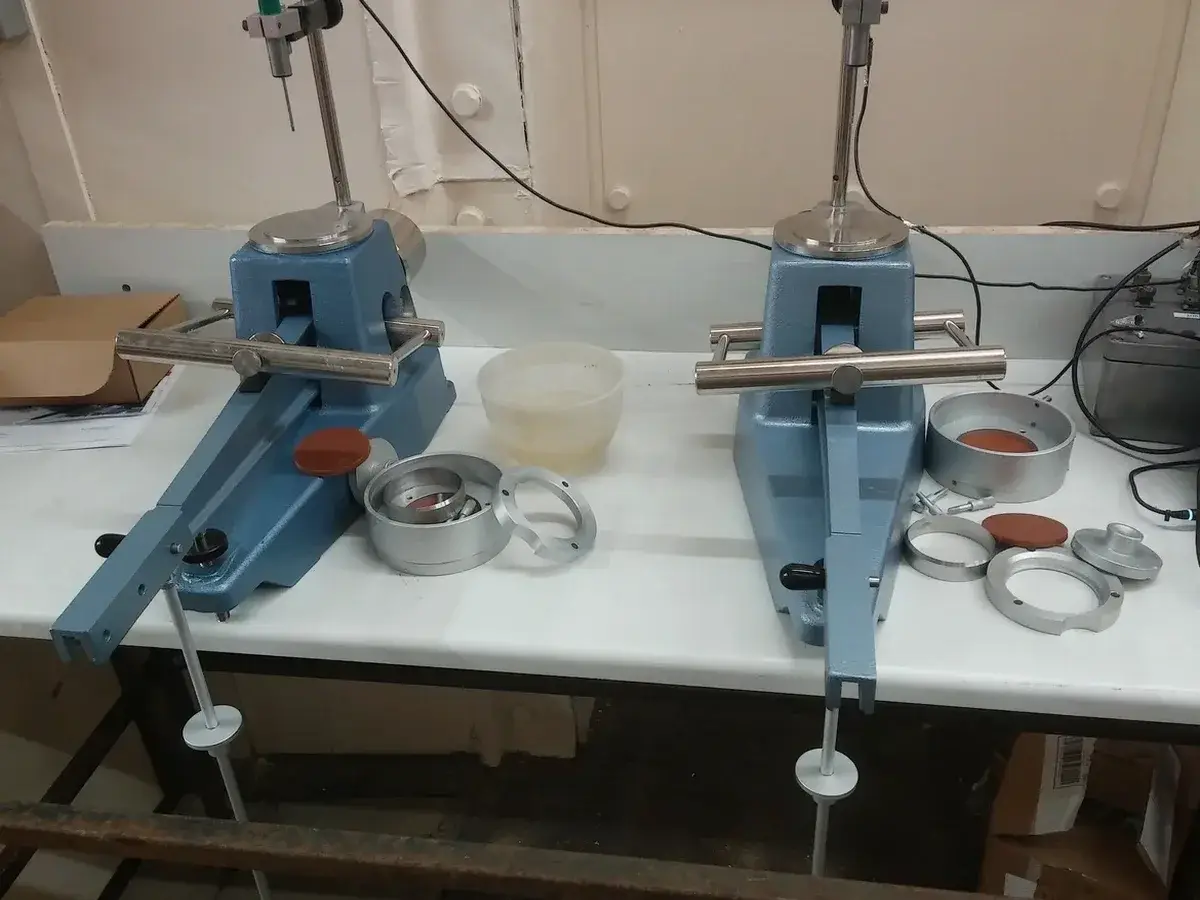
Complete ASTM D4318 testing with Casagrande cup and hand-rolling method. Includes moisture content determination, five-point liquid limit curve, and calculated plasticity index. Results reported within 48 hours.
USCS Soil Classification Package
Combines Atterberg limits with grain size analysis (sieve and hydrometer) to assign full USCS group symbol per ASTM D2487. Includes group name, plasticity chart plotting, and engineering properties summary.
Shrink-Swell Potential Assessment
Uses Atterberg limits data along with natural moisture content and clay fraction to estimate volume change potential. Applicable to Boise's expansive loess and lacustrine deposits. Includes activity ratio calculation.
Typical parameters
Common questions
What is the standard turnaround time for Atterberg limits testing in Boise?
Standard turnaround is 48 hours from sample receipt. Rush testing with 24-hour results is available for active construction sites. Time starts when the sample reaches our Boise laboratory; we log every sample with a timestamp upon arrival.
How much does Atterberg limits testing cost per sample?
Atterberg limits testing in Boise typically ranges from US$50 to US$100 per sample, depending on whether you need just the liquid and plastic limits or the full USCS classification package with grain size analysis included.
Can Atterberg limits be performed on samples with sand content above 50%?
ASTM D4318 requires the test specimen to pass the No. 40 sieve. If the sand fraction exceeds 50%, we first run a grain size analysis to determine the fines content. The Atterberg limits are then performed on the minus No. 40 fraction only, and the USCS classification reflects the full particle size distribution.
Why do Boise soils show such variable plasticity across short distances?
The Treasure Valley's depositional history mixes Lake Bonneville lacustrine clays, wind-deposited loess, and Boise River alluvium. A single site can transition from low-PI silt to high-PI clay within 50 horizontal feet. This is why we recommend Atterberg testing on every distinct soil layer, not just one bulk sample per boring.