Boise sits on a mix of alluvial fan deposits, lacustrine clays from ancient Lake Idaho, and basalt bedrock. That variety matters when you design for earthquake loads. A site response analysis tells you how those soil layers will amplify or dampen incoming seismic waves. Without it, you are guessing at the actual ground motion. For projects near the Boise Front or along the river, soil stiffness can shift dramatically over a few hundred feet. That is why we run a proper site-specific study instead of relying on generic IBC values. The analysis starts with a field campaign that often includes MASW and HVSR surveys to capture shear-wave velocity profiles. Those data feed into a nonlinear soil model. The output gives you acceleration response spectra and strain-compatible soil properties. It is the only reliable way to match the seismic demand to your foundation system.
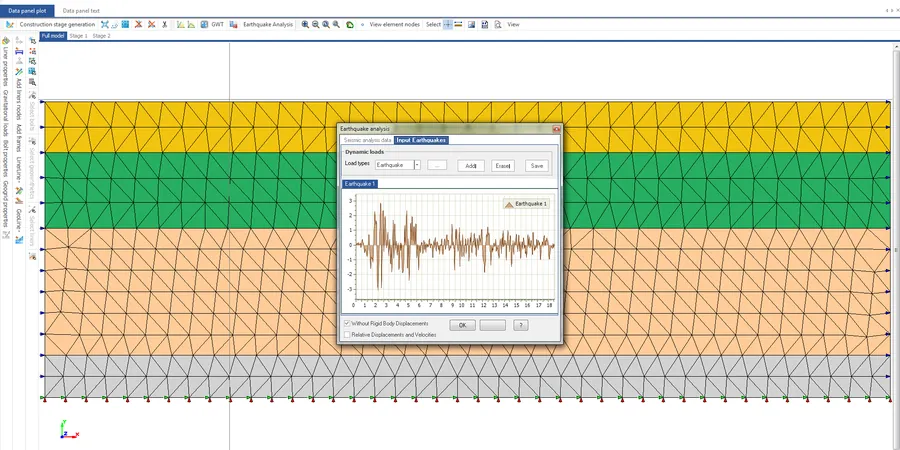
A generic site class can misrepresent Boise's basin-edge effects by a factor of two or more. Site-specific analysis removes that uncertainty.
Process overview
Local context
Compare the North End near the foothills with the bench area south of the river. The North End sits on stiff fan gravels; the bench has thick layers of soft lacustrine clay. A site response analysis for those two sites will produce very different spectra. The clay amplifies long-period motion, which can hurt mid-rise buildings. The gravel attenuates it. If you treat both with the same site class, you either overdesign one or underdesign the other. The basin-edge effect near the Boise Front also traps surface waves and increases shaking duration. That is a risk that standard code maps miss. We map that zone using shear-wave velocity profiles and adjust the design spectra accordingly.
Reference standards
ASCE 7-22 (site classification and response spectra), ASTM D4428/D4428M-14 (MASW and surface-wave methods), ASTM D4015-15 (resonant column and torsional shear), NEHRP Recommended Seismic Provisions (FEMA P-1050)
Additional services
Shear-Wave Velocity Profiling (MASW / ReMi)
Non-invasive surface-wave surveys to obtain Vs30 and depth profiles. We deploy 24-channel arrays and process data with advanced dispersion-curve inversion. Results are used to assign NEHRP site class and provide input for ground-response models.
Laboratory Dynamic Testing (Resonant Column / Cyclic Triaxial)
Undisturbed samples tested for shear modulus degradation and damping curves. Tests run per ASTM D4015 and D5311. The curves are essential for equivalent-linear and nonlinear site response models.
Typical parameters
Quick answers
When is a site response analysis required in Boise?
It is required for Seismic Design Category D, E, or F buildings per IBC. Also for critical facilities like hospitals and schools. If the site class changes across the footprint or the soil profile exceeds 30 m, a site-specific analysis is the standard recommendation.
What is the difference between a generic NEHRP site class and a site-specific analysis?
Generic site classes use average Vs30 from broad maps. A site-specific analysis measures Vs30 on your property, models soil nonlinearity, and accounts for basin-edge effects. In Boise, generic classes can overestimate or underestimate amplification by 30% to 60% depending on the location.
How much does a site response analysis cost for a project in Boise?
The cost typically ranges between US$ 1,110 and US$ 4,270 depending on the number of profiles, depth of investigation, and laboratory testing. Custom quotes are prepared after reviewing the site conditions and project scope.