Downtown Boise sits on dense gravels that provide decent support, but drive just a few miles south into the Bench area and you hit silty clay with high plasticity. That contrast is exactly why flexible pavement design here can't rely on a one-size-fits-all formula. In our experience, the subgrade conditions change faster than most developers expect. A pavement that works fine near the Greenbelt may show premature rutting on a lot in West Boise if the design doesn't account for the local soil variability. That's why we always start with a thorough subgrade evaluation before running any structural number calculations. For projects on clay-rich soils, we often combine the pavement analysis with a stabilization with lime and cement to improve the support layer before placing the asphalt.
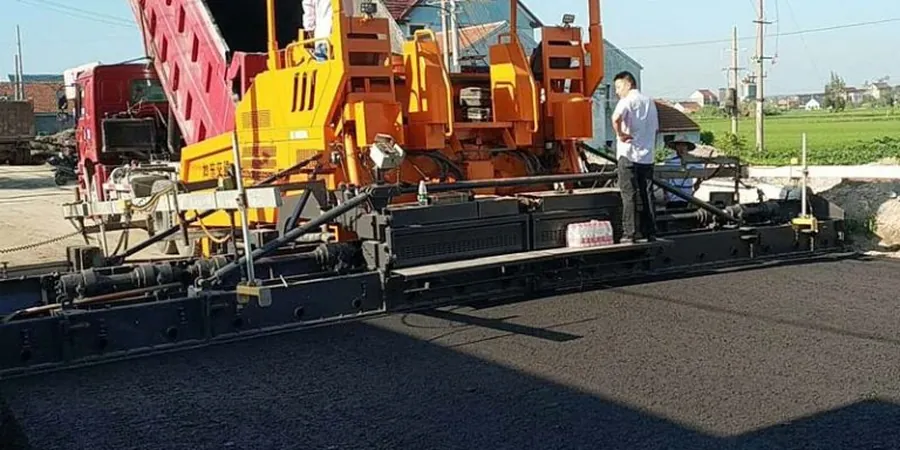
A pavement that works near the Greenbelt may show premature rutting in West Boise if the design ignores local soil variability.
Process overview
Local context
The Idaho Public Works Standards (IPWS) and AASHTO 1993 are the guiding documents for pavement design in Boise. They are especially relevant here because of the city's freeze-thaw cycles and variable soil moisture. If the design ignores the frost penetration depth — which reaches about 24 inches most winters — the base layer can saturate and heave, cracking the asphalt above. We have also seen cases where the subgrade's plastic clay was not identified early, leading to differential settlement within two years. A proper flexible pavement design mitigates those risks by factoring in real subgrade data and local climate patterns from the start.
Reference standards
AASHTO 1993 Guide for Design of Pavement Structures, Idaho Public Works Standards (IPWS) 2023, ASTM D1883-21 (CBR Test), ASTM D698-12 (Standard Proctor)
Additional services
Subgrade Evaluation & CBR Testing
Field sampling and laboratory CBR tests to determine the exact bearing capacity of your site's soil. We follow ASTM D1883 and provide data directly for your structural number calculations.
Flexible Pavement Structural Design
Full AASHTO 1993 design including traffic load analysis, layer thickness determination, and drainage recommendations. We deliver a report ready for permitting in Ada County.
Typical parameters
Quick answers
How much does flexible pavement design cost in Boise?
For a standard commercial or residential project in Boise, the cost typically ranges between US$1,850 and US$4,730. The final price depends on the number of test pits, lab tests required, and the complexity of the traffic analysis. We provide a detailed quote after reviewing your site conditions.
What soil tests are needed before designing a flexible pavement?
The essential tests include the CBR (ASTM D1883) for subgrade strength, Proctor compaction (ASTM D698) for moisture-density relationships, and Atterberg limits (ASTM D4318) to identify expansive clays. In some Boise areas with high groundwater, we also recommend a permeability test.
How does Boise's freeze-thaw climate affect pavement design?
Boise experiences about 80 freeze-thaw cycles per year. That means the base course must be thick enough to prevent frost heave. We design for a minimum frost depth of 24 inches, and we specify non-frost-susceptible materials for the subbase to avoid ice lens formation under the asphalt.