In-situ testing in Boise provides direct measurement of subsurface conditions without the disturbance inherent in laboratory sampling, essential given the region’s variable alluvial, colluvial, and basalt-derived soils. Methods like the Flat Dilatometer Test (DMT) deliver high-resolution stratigraphy and lateral stress data, while field vane shear testing (VST) accurately captures undrained shear strength in the soft, saturated silts and clays prevalent along the Boise River corridor. These procedures follow ASTM International standards, ensuring results meet local building code requirements for foundation design.
These investigations are critical for high-rise developments in downtown Boise, infrastructure projects, and stormwater management facilities where bearing capacity and permeability are key. For direct bearing verification, the plate load test (PLT) validates allowable pressures on compacted fill, and undisturbed Shelby tube sampling retrieves intact specimens for accurate lab consolidation analysis. Proper field testing minimizes geotechnical uncertainty and construction risk.
Anchor bond stress in Boise alluvial sands typically ranges from 15 to 40 psi, but must be verified with site-specific pullout tests.
Process overview
Local context
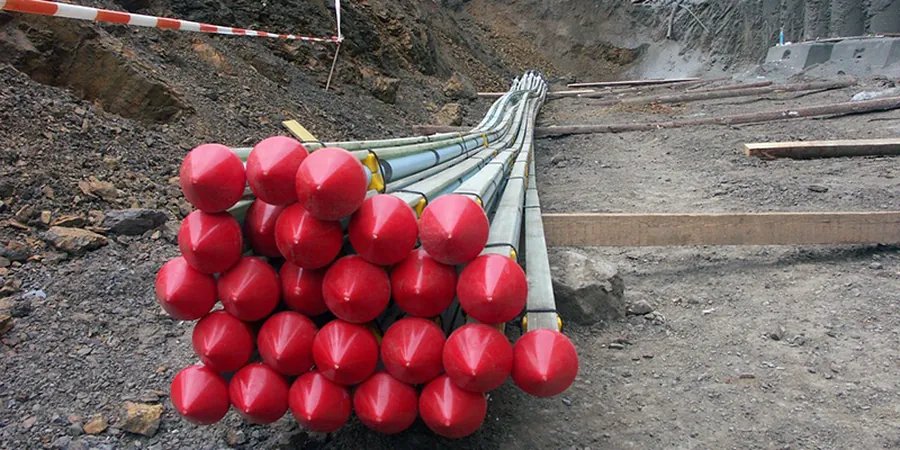
A drill rig operating on a steep slope in the Boise Foothills must be precisely positioned to avoid overturning in the fractured basalt. The crew uses temporary casing to prevent hole collapse in the cobbly alluvium. If the drill encounters groundwater — common near the Boise River — the grout mix may need accelerators to set before washout occurs. Corrosion risk is high in the region's alkaline soils; we specify epoxy-coated tendons and full-length grouting for permanent anchors. A failed anchor here can lead to progressive slope failure, which is why every design includes a proof test on the first production unit.
Reference standards
IBC 2018 Section 1807, ASCE 7-16 Section 15.7, ASTM D4435 (pullout test), FHWA-NHI-10-016 (ground anchors)
Additional services
Active Anchor Design
Prestressed tiebacks for retaining walls and foundations, including corrosion protection, lock-off loads, and creep monitoring per IBC 2018.
Passive Anchor Design
Soil nail walls and deadman anchors for slope stabilization, with verification pullout tests and global stability analysis.
Anchor Testing & Verification
On-site proof testing, performance testing, and creep testing of production anchors. Reports include load-displacement curves and pass/fail criteria.
Typical parameters
Quick answers
What is the difference between active and passive anchors?
Active anchors are prestressed after installation to apply a compressive load to the soil or structure. Passive anchors (like soil nails) are not prestressed and only resist movement after some displacement occurs. The choice depends on allowable wall movement, soil type, and loading conditions.
How much does anchor design and testing cost in Boise?
For a typical commercial project in the Treasure Valley, anchor design and testing costs range from US$1,140 to US$3,500. This includes pullout tests, design report, and field supervision. Larger projects with multiple anchor rows may cost more.
What soil conditions affect anchor capacity in Boise?
Boise has mixed soils: basalt rock, cemented hardpan, and loose alluvial sands. Anchor bond stress varies significantly. In the Foothills, fractured basalt can give high bond values (50+ psi). Near the river, sands may yield only 15 to 25 psi. Each zone requires site-specific pullout verification.
Do I need a permit for temporary anchors in Boise?
Yes. The City of Boise requires a geotechnical report and shoring design stamped by a licensed professional engineer for any excavation over 4 feet deep. Temporary anchors must comply with IBC 2018 and local amendments. We handle the documentation and coordinate with the building department.