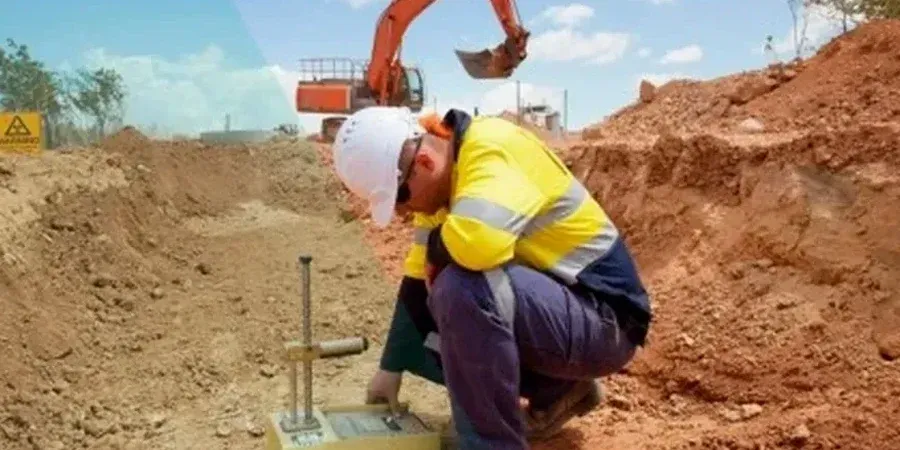
A trailer-mounted Geometrics Atom 24-channel seismograph with 4.5 Hz geophones rolls onto a lot near the Boise River. The crew lays out a 115-meter spread, checks coupling with a tap test, and fires a sledgehammer source into a ground that carries the quiet signature of an ancient lakebed. In Boise, seismic microzonation starts with the surface wave—a Rayleigh pulse that travels through sand, silt, and gravel layers deposited by the Bonneville Flood roughly 15,000 years ago. The raw data undergoes dispersion analysis and inversion to extract a one-dimensional Vs profile, which becomes the basis for classifying the site into an IBC/ASCE 7 site class. From the North End to the Harris Ranch foothills, the same surface-wave approach anchors every project that must prove compliance with Chapter 16 of the International Building Code. When the basin-edge geometry near the Foothills Fault complicates the inversion, the team pairs the MASW line with a CPT sounding to pin down the impedance contrast at refusal depth, ensuring that the velocity model does not drift into false bedrock. For deeper basin characterization beyond 30 meters, MASW arrays deployed at multiple aperture lengths capture the fundamental-mode dispersion down to 0.5 Hz.
In the Treasure Valley, a Vs30 number without a basin-edge correction can underestimate the long-period demand on a mid-rise by 30 percent or more.
Our approach and scope
Local ground factors
A three-story office building on a Brownfield parcel west of downtown Boise showed no visible settlement cracks, but the geotechnical baseline was thin: two borings to 15 feet and pocket penetrometer readings. The developer wanted to add two floors of steel-frame construction, which triggered a seismic upgrade review. A microzonation survey revealed a 12-meter-thick layer of soft silty clay with a shear-wave velocity of 160 m/s—below the NEHRP threshold for Site E classification—overlying a sharp velocity contrast at the Tertiary basalt surface. The basin-edge geometry produced a computed amplification factor of 2.3 at a one-second period, nearly double the code-default value for Site D. Without the site-specific response analysis, the structural engineer would have designed for a base shear roughly 40 percent lower than the actual demand. The project team redesigned the lateral system with buckling-restrained braces and added a stone column ground improvement program to stiffen the clay and lift the site into Site D performance. In Boise, where the basin-edge fault runs along the foothills for over 30 kilometers, this scenario repeats more often than the generic hazard maps suggest.
Relevant standards
ASCE 7-22 Chapter 21 (Site-Specific Ground Motion Procedures), IBC 2024 Section 1613 (Earthquake Loads), ASTM D7400-19 (MASW and Seismic Crosshole Testing), NEHRP Recommended Provisions (site classification)
Other technical services
Vs30 Profiling with MASW
Active-source surface-wave acquisition at 24 channels with 2–4.5 Hz geophones, processed through dispersion picking and iterative inversion to deliver 1D Vs profiles and IBC site class per ASCE 7-22.
Site-Specific Response Analysis
Equivalent-linear and nonlinear ground-response modeling using DEEPSOIL or Strata, incorporating Boise basin geometry to compute design response spectra and amplification factors at the parcel scale.
Basin-Edge Hazard Assessment
Targeted investigation for parcels within 1 km of the Foothills fault trace, evaluating the impedance contrast and potential for amplified long-period motion using combined MASW and CPT refusal data.
Liquefaction Triggering with Vs-Based Methods
Vs-correlated cyclic resistance ratio evaluation for saturated granular layers, following the Andrus and Stokoe procedure referenced in NCEER guidelines, integrated with the microzonation velocity model.
Typical parameters
Common questions
What is the typical cost range for a seismic microzonation study on a Boise commercial lot?
For a standard commercial parcel in Boise, a complete seismic microzonation study—including MASW acquisition, Vs30 profiling, site classification per IBC, and a site-specific response analysis—typically ranges from US$4,780 to US$18,910. The final figure depends on the depth of investigation (30 m versus 100 m), the number of array spreads needed to cover the building footprint, and whether supplementary SPT or CPT soundings are required to calibrate velocity correlations to local Glenns Ferry or Bonneville Flood deposits.
How does Boise's basin-edge geology influence the site classification results?
Parcels located within approximately one kilometer of the Foothills fault trace sit above a sharp velocity contrast where soft basin sediments abut Tertiary granite and basalt. This geometry can trap and amplify long-period seismic waves, producing spectral accelerations at one-second and two-second periods that exceed the ASCE 7 default amplification factors. A microzonation survey in this zone must model the two-dimensional basin effect rather than relying solely on the one-dimensional Vs30 site class. The team typically runs longer-aperture MASW spreads and, when refusal allows, a deep CPT to constrain the impedance structure at the basin-floor interface.
How long does a microzonation field campaign take in the Boise area?
Field acquisition for a single-lot MASW survey typically completes in one day, assuming the site is accessible and free of heavy construction traffic. Processing, dispersion analysis, inversion, and report preparation add approximately one to two weeks. If the scope includes supplementary SPT drilling for N-value calibration or a site-specific response analysis using time-history input motions scaled to the Boise USGS coordinate, the full deliverable timeline extends to three weeks. Winter conditions in the Treasure Valley—particularly frozen ground in December and January—can delay surface-wave acquisition because the high-velocity frozen crust distorts the dispersion curve.
Does the City of Boise require a microzonation study for building permits?
The City of Boise currently references IBC 2024 Chapter 16, which requires a site-specific ground-motion analysis for structures assigned to Seismic Design Category D, E, or F when the site class is not clearly Site A, B, or C. In practice, this means that any mid-rise or essential facility proposed on a Site D or Site E parcel—common in the river corridor and the basin-edge zone—will trigger the requirement for a microzonation study. The geotechnical report submitted with the permit package must include the Vs30 value, the site class determination, and the design response spectrum developed per ASCE 7-22 Section 21.2.