Anyone who has built roads or parking lots in Boise knows the local soils can be deceptive. The surface may look firm, but deeper layers of silty sand or clay-rich alluvium often tell a different story. That is why we run the laboratory CBR test in Boise as a standard step before any pavement design. This test measures the California Bearing Ratio of compacted soil samples under controlled moisture and density conditions. It gives engineers a reliable number to base pavement thickness on. Without it, you risk overdesigning or underdesigning the structural section. For projects on the Boise River floodplain, where groundwater can soften subgrades, this data becomes even more critical. We complement the CBR with a subgrade soil analysis to understand the full soil profile before making recommendations.
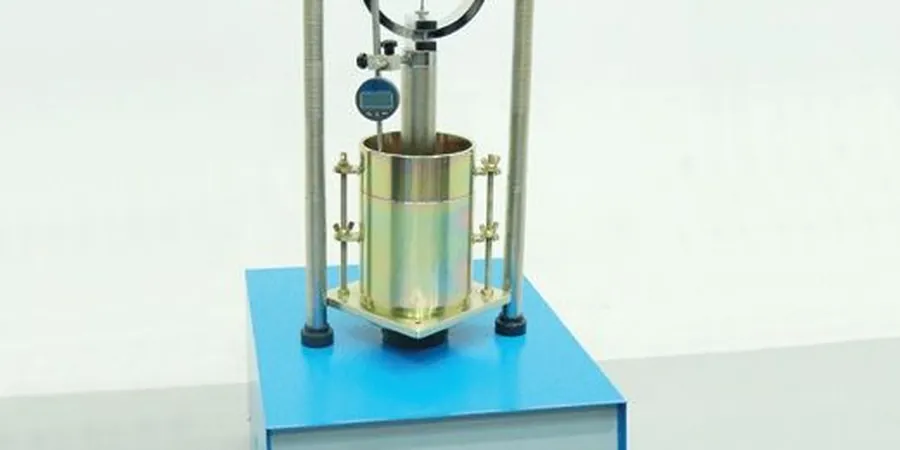
A soaked CBR value below 3 means the subgrade is too weak for standard pavement — stabilization must be considered before placing base course.
Process overview
Local context
Boise sits on the western edge of the Rocky Mountains, where the geology transitions from hard basalt to loose alluvial fans. The biggest risk we see locally is assuming uniform subgrade strength across a site. A road may cross several soil types — clayey silt near the river, sandy gravel closer to the foothills. If you design the pavement based on one CBR value from a single test pit, the thin sections will fail prematurely. We have seen pavement cracking and rutting in new subdivisions because the designer used a CBR of 15 for the entire alignment when the actual value dropped to 6 in wet areas. That is why we recommend at least one laboratory CBR test per 500 feet of road in Boise, paired with field density checks using the sand cone method to verify compaction.
Reference standards
ASTM D1883-16, AASHTO T 193, IBC 2021 Chapter 18
Additional services
Standard Proctor Compaction
Determines the optimum moisture content and maximum dry density for your soil. Essential prep work before any CBR test.
Modified Proctor Compaction
Same principle as standard Proctor but with higher compaction energy. Used for base and subbase materials in heavy-traffic pavements.
Swell Test
Measures the expansion potential of clay soils during soaking. Critical for Boise's expansive clay deposits near the river.
Unconfined Compressive Strength
Provides quick strength data on cohesive soils. Helpful when you need a rough estimate of bearing capacity before the CBR results come back.
Typical parameters
Quick answers
What is the difference between soaked and unsoaked CBR?
Soaked CBR simulates the worst-case scenario where the subgrade becomes saturated. We soak the specimen for 96 hours and measure both the penetration resistance and any swell. Unsoaked CBR is faster but less conservative. In Boise, where spring runoff can saturate soils, we always recommend the soaked test for pavement design.
How much does a laboratory CBR test cost in Boise?
The typical cost for a single laboratory CBR test in Boise ranges between US$120 and US$210. This includes sample preparation, four-day soaking, penetration testing, and a certified report. Volume discounts apply for multiple samples from the same project. Prices may vary if additional swell testing or modified Proctor compaction is required.
How many CBR tests do I need for a road project?
For a typical subdivision road in Boise, we recommend one CBR test per 500 linear feet or per distinct soil type along the alignment. If you are designing a collector or arterial road where traffic loads are higher, increase the frequency to one test every 300 feet. The IBC and AASHTO guides both emphasize that variability in subgrade strength is the main source of pavement failure.