The contrast between the dense, highly compacted alluvial soils near the Boise River and the weathered granitic formations in the Foothills creates a unique challenge for underground construction. A tunnel in the river valley may encounter soft, water-saturated silts and clays, while a bore in the Bench neighborhood might hit more competent material. Geotechnical analysis for soft soil tunnels in Boise must bridge that variability. We combine standard penetration testing with careful stratigraphic logging to define the exact transition zones. Before any tunnel face advances, we recommend a georradar survey to map shallow utilities and voids, complemented by a resistivity profile to detect groundwater channels that could destabilize the excavation.
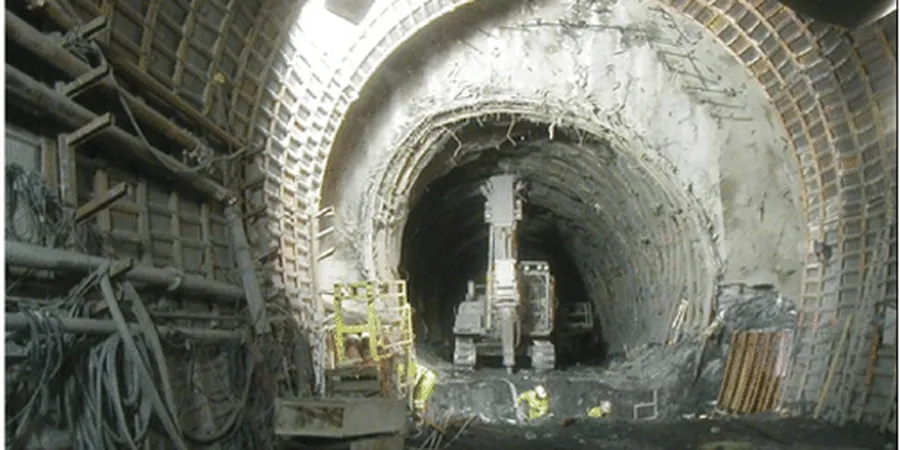
Soft ground tunneling in Boise demands site-specific liquefaction assessment and stratified soil profiling — a generic study won't cut it.
Process overview
Local context
The biggest physical risk during soft ground tunneling in Boise is sudden groundwater inflow through permeable sandy lenses. Our crew uses an Osterberg-type hydraulic drill rig with continuous casing to prevent collapse while sampling. If we hit a water-bearing zone, we stop, install a piezometer, and run a rising head test on site. That real-time data feeds directly into the tunnel support design. Missing a perched water table can lead to face instability and surface settlement. The geotechnical analysis for soft soil tunnels in Boise always includes at least three piezometers per borehole alignment to capture seasonal fluctuations.
Reference standards
ASTM D1586-18 (Standard Test Method for SPT), ASTM D2487-17 (Unified Soil Classification System), IBC 2021 (Chapter 18 for foundations and excavations), ASCE 7-16 (Section 11.4 for site class definition), FHWA-NHI-09-010 (Tunnel manual for soft ground)
Additional services
Stratigraphic profiling and soil classification
Continuous sampling with SPT and thin-wall tubes. We classify every unit per USCS, identify organic zones, and map the contact between alluvial and granitic materials.
In-situ permeability and groundwater monitoring
Packera and rising/falling head tests in piezometers. We measure k values between 10^-3 and 10^-6 cm/s, critical for predicting inflow into the tunnel face.
Liquefaction and seismic site response analysis
SPT-based liquefaction triggering evaluation using Idriss-Boulanger (2008). We also run 1D equivalent-linear site response analysis to estimate ground accelerations at tunnel depth.
Typical parameters
Quick answers
What does a geotechnical analysis for soft soil tunnels in Boise typically include?
It includes SPT borings, undisturbed sampling, groundwater monitoring, laboratory triaxial testing, liquefaction assessment per Youd-Idriss, and seismic site classification. The report provides soil parameters for tunnel lining design and excavation support.
How much does a geotechnical study for a tunnel in Boise cost?
The cost ranges between US$4,280 and US$16,550 depending on the number of borings, depth of investigation, and lab testing volume. A typical study for a 200-ft tunnel length with three boreholes falls around US$8,500.
Which areas of Boise have the most problematic soft soils for tunneling?
The Boise River corridor from Garden City to Barber Park has thick sequences of soft silts and loose sands with shallow groundwater. The downtown core also has buried channels with variable soil strength. Both zones require careful liquefaction and settlement analysis.