Boise grew fast after the 1970s, spreading into the Boise River floodplain and the foothills of the Rocky Mountains. That expansion brought new challenges: soft alluvial soils, variable groundwater, and a seismic environment shaped by the nearby Wasatch and Intermountain seismic zones. Back in 1970, the city had about 75,000 people; today it tops 240,000, and much of that construction sits on ground prone to amplification. For any structure requiring resilience beyond code-minimum, base isolation seismic design becomes the logical answer. We combine local borehole data with dynamic analyses to decouple the building from ground motion, reducing spectral accelerations by 40-70 percent. Before committing to an isolator layout, we often run a response spectrum analysis to calibrate the target displacement and damping ratio against real Boise soil profiles. That step avoids over-engineering or underestimating the drift demands on the isolation system.
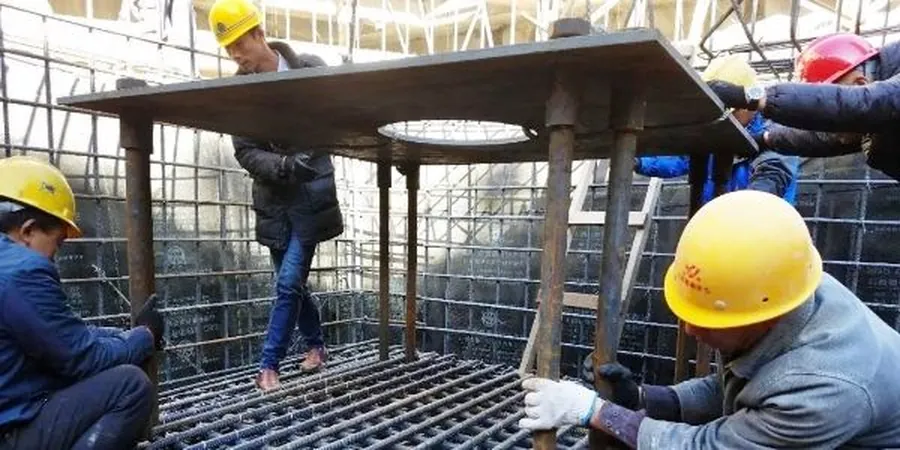
Decoupling a building from the ground with base isolation reduces spectral acceleration by 40-70 percent when site-specific soil data drives the design.
Process overview
Local context
A common mistake we see in Boise is designing a base isolation system using the default ASCE 7 response spectrum without accounting for the actual soil column. The Boise River alluvium can be 50 to 100 feet deep in the downtown core, with Vs30 values around 700-900 ft/s — that places many sites on the boundary between class C and D. If you assume class C but the site behaves as D, the spectral acceleration at short periods jumps by nearly 30 percent. That shift can push the isolator displacement beyond the moat clearance, leading to pounding against the retaining wall during a major event. A proper site-specific response analysis using shear-wave velocity profiles avoids that risk entirely.
Reference standards
ASCE 7-16 Chapter 17 – Seismic Isolation Systems, IBC 2021 Section 1705.12 – Special Inspection for Isolation Systems, ASTM E2026-16 – Seismic Response of Structures, NEHRP Recommended Provisions (FEMA P-1050)
Additional services
Isolator Sizing & Layout
We size lead-rubber, high-damping rubber, or friction pendulum bearings based on site-specific response spectra, including buckling and stability checks per ASCE 7-16.
Nonlinear Time-History Analysis
Using three-component ground motions scaled to the target spectrum, we verify isolator displacements, floor accelerations, and drift ratios for the design earthquake.
Moat & Utilities Detailing
We design the seismic gap, moat covers, and flexible utility connections to accommodate the maximum displacement without structural or nonstructural damage.
Typical parameters
Quick answers
How much does base isolation seismic design cost for a Boise project?
For a typical mid-rise building, engineering fees for base isolation design range between US$4.480 and US$7.330, depending on the number of isolators, complexity of the soil profile, and the type of analysis required (linear vs. nonlinear).
What soil conditions in Boise make base isolation necessary?
Soft alluvial deposits along the Boise River and deep colluvium in the foothills amplify long-period ground motion. Buildings on those soils with a natural period above 1.0 second can experience 2-3 times higher spectral accelerations than a rock site — base isolation resets the building period to 2.0-3.0 seconds, avoiding resonance.
Can I retrofit an existing Boise building with base isolation?
Yes, but the feasibility depends on the existing foundation system and column grid. We evaluate the existing structure's stiffness, load path, and clear height below the first floor. If the building has a concrete mat or grade beams, we typically jack the structure, cut the columns, and install isolators above the footing.
How do you verify the isolator performance after installation?
We require full-scale prototype testing per ASCE 7-16 Table 17.8-1 — a sequence of axial, shear, and cyclic tests at the design displacement and 1.2× the maximum displacement. Additionally, we install accelerometers and displacement transducers on the isolation interface for long-term monitoring.