Boise grew rapidly along the Boise River, where alluvial terraces and basalt formations alternate beneath the city. That mix of coarse river gravels and fractured volcanic rock creates specific challenges for fluid containment. When a project requires a liner system, the geomembrane specification must account not only for the chemical environment but also for the subgrade conditions typical of the Treasure Valley. A poorly specified membrane on a basalt-rich subgrade can suffer puncture during installation. Before finalizing the spec, the team often runs a permeability field test to confirm the natural soil's hydraulic conductivity, which directly affects drainage layer design. The combination of local geology and regulatory requirements makes Boise a market where generic specifications rarely work without adaptation.
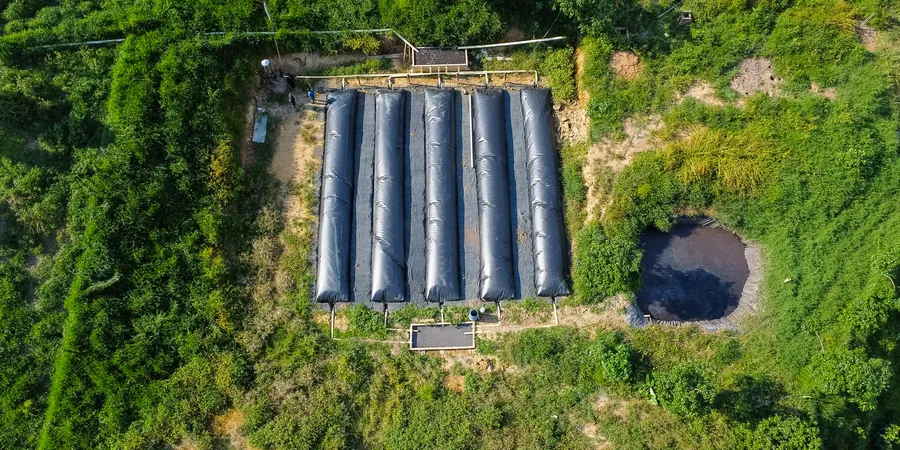
A geomembrane specification that ignores Boise's basalt subgrade and freeze-thaw cycles will likely fail within the first two winters regardless of polymer grade.
Process overview
Local context
Compare two Boise sectors: the Bench area, underlain by the Glenns Ferry Formation with silty clay layers, versus the West Valley, where sandy gravel from the Boise River floodplain dominates. In the Bench, the primary risk for a geomembrane system is differential settlement due to expansive clay cycles. In the West Valley, the risk shifts to puncture from angular basalt cobbles and high groundwater that can cause uplift during installation. A specification written for one zone copied to the other will miss these local failure modes. The difference in subgrade stiffness alone — measured via plate load tests — can require a change in the geotextile protection layer thickness. Not adjusting the spec to the specific sector of Boise is a common oversight.
Reference standards
ASTM D7230-21 (HDPE geomembrane testing), GRI-GM13 (smooth HDPE specification), ASTM D4437 (field seam evaluation)
Additional services
Material Selection & Thickness Design
We evaluate the chemical exposure, UV duration, and mechanical loads to recommend the optimal polymer type and thickness. For Boise's agricultural lagoon liners, HDPE 1.5 mm is standard. For temporary construction ponds, LLDPE 1.0 mm often suffices at lower cost.
Quality Assurance Plan Development
We write the CQA plan covering raw material testing, installation supervision, and seam testing frequency. The plan references ASTM D6392 for seam peel and shear, and includes hold points for Boise's typical cold-weather installation windows.
Typical parameters
Quick answers
What is the difference between HDPE and LLDPE for a geomembrane specification?
HDPE offers higher tensile strength and chemical resistance, making it the standard for landfill and containment applications. LLDPE provides greater flexibility and conformability, useful for irregular subgrades or low-stress applications like decorative ponds. The choice depends on the site's deformation tolerance and chemical exposure.
How much does a geomembrane specification service cost in Boise?
The typical range for a full specification and CQA plan is between US$720 and US$1.720, depending on project complexity, number of liner layers, and whether field testing is included. Larger landfill specs with multiple geomembrane types sit at the upper end of this range.
What subgrade preparation is required before installing the specified geomembrane?
The subgrade must be smooth, free of sharp particles larger than 19 mm, and compacted to at least 90% of the standard Proctor density. In Boise, basalt fragments often require an additional geotextile cushion or a sand bedding layer to prevent puncture. A proof roll with a smooth drum roller is recommended.
Does Boise's climate affect the geomembrane welding specification?
Yes. Cold temperatures below 5 °C can reduce extrusion weld adhesion, while summer heat above 35 °C can cause excessive thermal expansion during hot wedge welding. The specification must include pre-heat requirements for winter installations and seam relaxation periods for summer work.