Many contractors in the Treasure Valley assume a 2:1 slope is safe without verifying the underlying soils. That shortcut fails on the silty loess and basalt colluvium common around Boise. We perform slope stability analysis using limit-equilibrium methods (Bishop simplified, Spencer) and finite-element modeling when needed. Before any cut or fill, we correlate shear strength parameters with local groundwater levels. A proper analysis prevents costly failures during spring thaw or after irrigation events. We also integrate resistividad eléctrica SEV to map subsurface layering when the geology is complex. This avoids surprises on hillside lots near the Foothills.
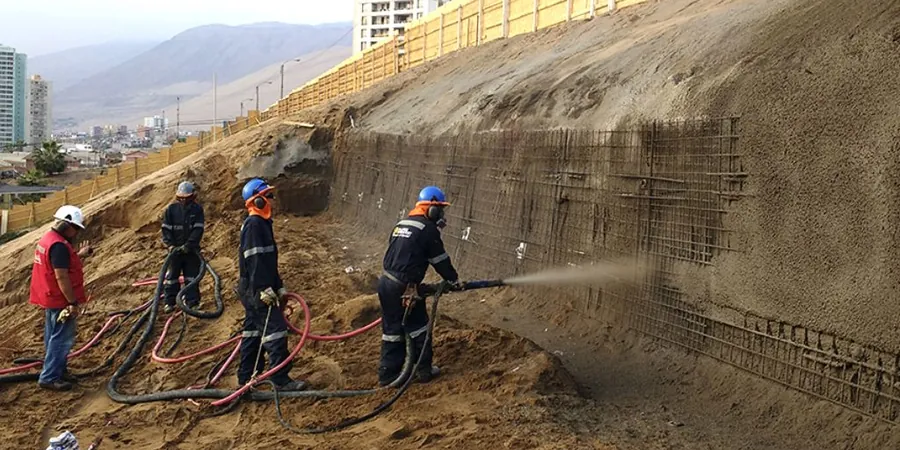
A slope that looks stable in dry August can fail during a wet spring when pore pressures rise by 30%.
Process overview
Local context
A 30-foot cut for a commercial pad in Southeast Boise failed during construction in 2022. The design assumed homogeneous sand, but a thin clay seam at 12 feet caused a rotational slide. The repair cost over $80,000 and delayed the project by six weeks. That is the consequence of skipping site-specific slope stability analysis. In the Foothills, the risk is higher: shallow slides often occur after heavy rain or snowmelt, damaging foundations and roads below. We have seen houses lose support because a cut slope was not analyzed for long-term drained conditions.
Reference standards
FHWA-NHI-05-037 (Slope Stability Reference Manual), IBC 2021 Section 1806 (Slope Stability), ASTM D3080 (Direct Shear Test)
Additional services
Limit-Equilibrium Analysis
Bishop simplified and Spencer methods for two-dimensional stability. Includes sensitivity analysis on shear strength parameters.
Finite-Element Modeling
Plaxis 2D or RS2 for complex geometries, staged construction, and pore-pressure dissipation. Common for Boise hillside subdivisions.
Instrumentation & Monitoring
Installation of inclinometers, piezometers, and surface markers. Monthly readings to verify the analysis assumptions.
Typical parameters
Quick answers
What is the typical cost for a slope stability analysis in Boise?
The cost ranges between US$1.080 and US$4.010 depending on site complexity, number of sections analyzed, and whether instrumentation is included.
How deep do groundwater levels affect slope stability in the Boise Foothills?
Groundwater typically sits 15–30 ft deep in the Foothills during dry months but can rise to within 5 ft after snowmelt or heavy rain. That rise reduces effective stress and can drop the factor of safety below 1.0 if not modeled.
What soil types are most problematic for slope stability in Boise?
Colluvial silts and clayey sands derived from basalt are the most problematic. They have low drained friction angles (28–32 deg) and can exhibit strain-softening behavior. Loess deposits also collapse when saturated, triggering shallow slides.