ASCE 7 and IBC outline strict settlement criteria for structures on compressible soils, and Boise's alluvial deposits along the Boise River create exactly the conditions where preloading design (without surcharge) becomes essential. Rather than importing fill, this method applies staged loading to consolidate soft layers gradually, using the structure's own weight or temporary fills at grade. The city's variable groundwater table, often intercepted at depths of 10 to 20 feet in the foothills, means drainage paths need careful evaluation. Before modeling consolidation rates, we typically run a consolidation test on undisturbed samples to determine Cv and Cc parameters, ensuring the preloading schedule matches real soil behavior under local loading conditions.
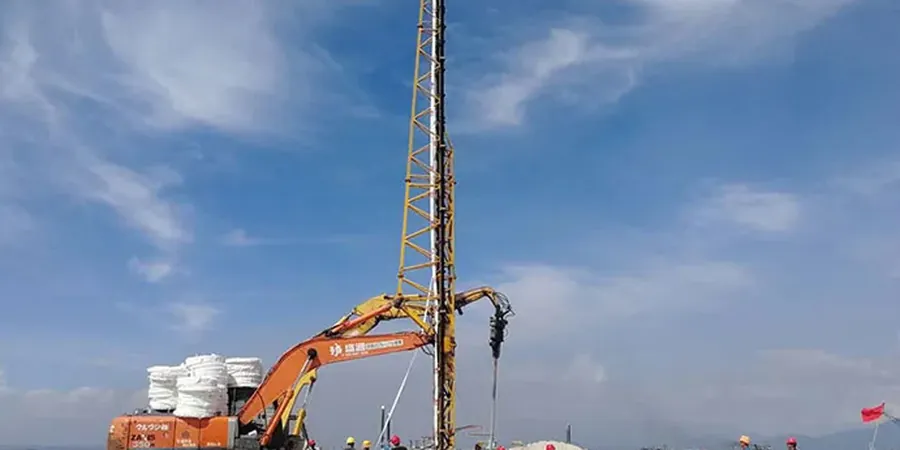
Preloading without surcharge leverages the structure's own weight to consolidate soft soils in Boise, reducing long-term differential settlement without importing extra fill.
Process overview
- Preconsolidation pressure (σ'p) from oedometer curves
- Compression index (Cc) for primary settlement estimates
- Time to reach 90% consolidation (t90) at each lift stage
Local context
A typical mistake among Boise contractors is skipping staged loading and placing the full fill thickness in one lift. Without the gradual dissipation of pore pressure that preloading design (without surcharge) provides, the soft clay layers can experience undrained failure, causing sudden differential settlement that cracks slabs and tilts footings. In the South Bench clay zones, this error has led to repairs exceeding $50,000 per structure. The right approach requires monitoring settlement plates weekly and adjusting the fill rate based on real-time pore pressure readings from installed piezometers.
Reference standards
ASCE 7-22 (Chapter 18 – Soil & Foundation Design), IBC 2021 (Section 1806 – Presumptive Load-Bearing Values), ASTM D2435-11 (Standard Test Methods for One-Dimensional Consolidation)
Additional services
Consolidation Modeling & Schedule Design
Develop site-specific preloading schedules based on oedometer tests and settlement plate data. We calculate lift thickness, waiting periods, and target pore pressure ratios to achieve required consolidation within project timelines.
Field Instrumentation & Monitoring
Install and read settlement plates, vibrating wire piezometers, and inclinometers to track real-time ground response during preloading. Weekly reports with trend analysis help you adjust fill placement before issues arise.
Post-Preloading Verification Testing
After the preloading period, we perform cone penetration tests (CPT) and undisturbed sampling to confirm that soil strength has increased and that post-construction settlement will stay within IBC allowable limits.
Typical parameters
Quick answers
What is the difference between preloading with and without surcharge?
Preloading with surcharge uses extra fill beyond the final design load to accelerate consolidation and then removes the excess. Preloading without surcharge applies only the planned fill or structural load, so consolidation takes longer but avoids importing and later removing extra material. It's ideal when site access is tight or when surcharge removal would disrupt adjacent work.
How long does preloading without surcharge take in Boise's soils?
For typical silt and clay layers on the South Bench, achieving 90% consolidation can take 60 to 180 days, depending on layer thickness and drainage conditions. Sandy alluvium near the river consolidates faster, often within 30 to 60 days. We provide a site-specific timeline after running oedometer tests on undisturbed samples.
What happens if the preloading period is cut short?
Cutting the preloading period short leaves excess pore pressure in the soil. The structure will then experience ongoing settlement after construction, which can crack floor slabs, misalign utilities, and cause differential movement between columns. In Boise's silty clays, this could mean an additional 2 to 4 inches of settlement over the first year.
Do I need a permit for preloading design in Boise?
Yes. Any preloading plan that involves placing temporary fill or monitoring instrumentation typically requires a geotechnical report submitted with the building permit application. The City of Boise reviews settlement estimates and monitoring plans under IBC Chapter 18. We prepare the necessary documentation to support your permit submittal.