In Boise, the transition from the Boise River floodplain to the basalt-capped foothills creates sharp changes in soil behavior within a few blocks. A silty sand near the river might behave nothing like the clayey gravels on the bench. That is why the direct shear test is a workhorse for local geotechnical work. It gives you the cohesion and friction angle needed for foundation design, slope analysis, and retaining wall checks. We run it under ASTM D3080-10 standards, using a shear box that accommodates both undisturbed and remolded specimens. The test is fast and cost-effective, especially when you need drained strength parameters for slow-loading conditions like embankments or footings on Boise's alluvial soils. Before finalizing your footing dimensions, pairing the direct shear with a compression simple test on cohesive layers helps confirm unconfined strength in the same soil unit.
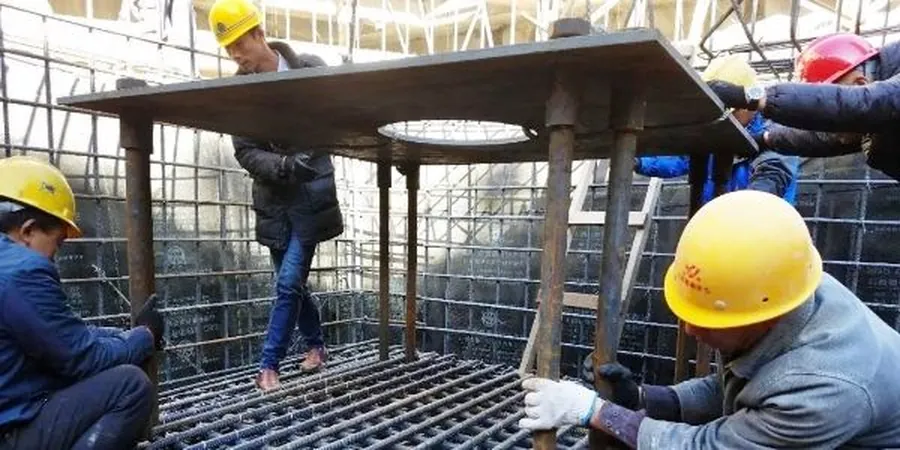
A single direct shear test on a Boise silty sand can mean the difference between a 2-foot spread footing and a 4-foot mat slab.
Process overview
- Specimen trimming from undisturbed tube samples or compaction molds.
- Consolidation under the target vertical stress until primary settlement stops.
- Shearing at a controlled rate (typically 0.5–1.0 mm/min) until failure or 15% strain.
Local context
Boise's rapid growth has pushed development onto steeper slopes and into areas with variable fill. A subdivision built without direct shear data on the underlying colluvium might face creeping slope failures years later. The 2017 Quail Ridge slide near the Boise Foothills is a reminder: soils with low residual friction angles can mobilize slowly under seasonal wetting. A drained direct shear test captures that condition. It tells you whether the factor of safety against long-term sliding is adequate. For cuts and fills in the Foothills, we recommend testing at both peak and large-displacement (residual) stages to cover the full range of possible failure behavior.
Reference standards
ASTM D3080-10: Standard Test Method for Direct Shear Test of Soils Under Consolidated Drained Conditions, AASHTO T-236: Standard Method of Test for Direct Shear Test of Soils, ASCE 7-16: Minimum Design Loads and Associated Criteria for Buildings and Other Structures (Section 12.13 – Soil-Structure Interaction)
Additional services
Consolidated Drained (CD) Direct Shear
Standard ASTM D3080 for drained strength. Ideal for slow-loading conditions like embankments, slopes, and footings on permeable soils. Three normal stresses, peak and residual values reported.
Consolidated Undrained (CU) Direct Shear with Pore Pressure
Shearing under undrained conditions while measuring pore pressure. Used when rapid construction or sudden loading is expected, such as in fill placement or surcharge operations.
Residual Shear (Large-Displacement)
Multiple reversal cycles to reach the residual strength envelope. Essential for landslide analysis, reactivated slip surfaces, and clay-rich soils in the Boise Foothills.
Rock Joint Direct Shear
For rock sockets, drilled shafts, or foundation interfaces on basalt. Tests the shear strength along rock discontinuities or concrete-rock contact surfaces. Includes roughness and infill characterization.
Typical parameters
Quick answers
How is the direct shear test different from a triaxial test?
The direct shear test forces failure along a horizontal plane, while the triaxial test allows failure on the weakest plane in the sample. Direct shear is simpler, faster, and cheaper, but it overestimates the friction angle slightly because the failure plane is fixed. It works best for granular soils and for projects where drained parameters are sufficient. For cohesive soils or undrained scenarios, a triaxial test is more representative.
What is the typical cost of a direct shear test in Boise?
A standard consolidated drained direct shear test on three specimens runs between US$600 and US$750 per test, depending on the number of normal stress stages and whether you need residual values. We also offer volume discounts for multi-test projects. The price includes sample preparation, testing, and a signed report. Rush turnaround (3–4 days) may add a surcharge.
Can I use direct shear results for slope stability analysis in the Boise Foothills?
Yes, but you need to test at both peak and residual conditions. Many slopes in the Foothills have colluvium with a high clay fraction, and the residual friction angle can be 10–15 degrees lower than the peak. A direct shear test with multiple reversal cycles gives you the residual envelope. That is the value used for long-term stability checks, especially after wet winters or seismic shaking.
How should I collect and ship samples for a direct shear test?
Use thin-walled tube samplers (ASTM D1587) for cohesive soils, or bulk bag samples for granular soils. Seal the tubes immediately with wax or plastic caps and label them clearly. Ship them in a rigid cooler with padding to avoid vibration. For disturbed samples, collect at least 5 kg in sealed plastic bags. Include a chain-of-custody form with project name, depth, and soil description. We accept samples Monday through Friday.