In Boise, the local geology often surprises engineers who assume uniform river deposits. We regularly see silty sands near the Boise River that test differently from the clayey gravels on the Bench. A proper laboratory permeability test (falling or constant head) gives you the hydraulic conductivity number you actually need for drainage design or seepage analysis. Without that data, you are guessing at how water moves through the ground. Our lab runs these tests under ASTM D2434 and D5084, using trimmed specimens or remolded samples depending on the material. The results feed directly into slope stability models and foundation drainage layouts. We also coordinate with field testing like the permeability test in the field when the site conditions require in-situ confirmation. For Boise projects, this combination of lab and field data is the standard approach.
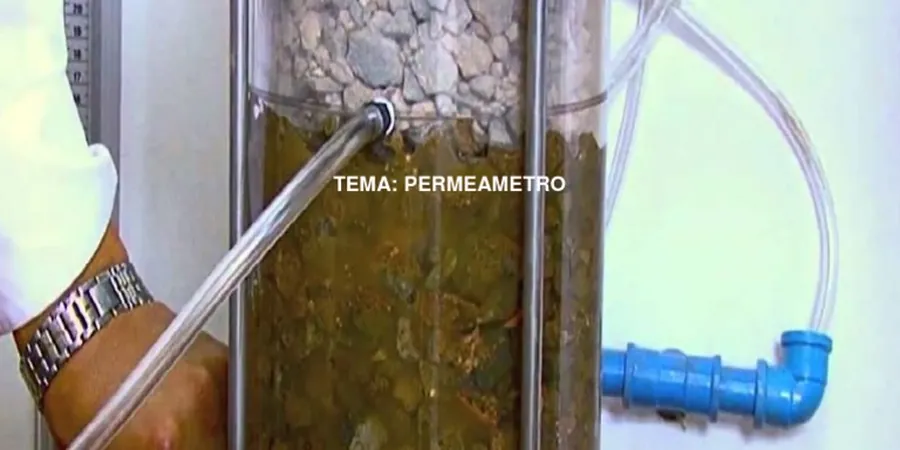
A single permeability value can change the drainage design from a simple French drain to a full underdrain system.
Process overview
Local context
We saw a retaining wall project in southeast Boise where the designer assumed a uniform sand with k = 10⁻² cm/s. After a heavy spring, the wall failed because the actual soil was a silty sand with k = 10⁻⁴ cm/s. Water built up behind the wall, and the drainage layer was undersized. A simple laboratory permeability test on a Shelby tube sample would have caught that difference. That is why we recommend testing at least two depths per boring in the phreatic zone. The cost of the test is trivial compared to the repair bill for a failed wall or a flooded basement. In Boise's variable alluvial deposits, one number is never enough.
Reference standards
ASTM D2434 (Constant head permeability), ASTM D5084 (Falling head permeability with back-pressure), ASTM D422 (Grain size analysis for correlation)
Additional services
Falling Head Permeability (ASTM D5084)
For fine-grained soils — silts, clays, and low-permeability mixes. Uses back-pressure saturation to achieve full saturation before the test. Results reported as cm/s with void ratio and saturation data.
Constant Head Permeability (ASTM D2434)
For sands and gravels with k above 10⁻⁴ cm/s. The specimen is compacted to target density and saturated under a constant hydraulic gradient. Ideal for drainage layer design and filter compatibility checks.
Typical parameters
Quick answers
What is the difference between falling head and constant head tests?
The falling head test measures how fast water drops in a standpipe through a low-permeability sample (silts, clays). The constant head test maintains a fixed water level and measures flow through higher-permeability soils (sands, gravels). We choose the method based on the expected hydraulic conductivity of the material.
How much does a laboratory permeability test cost in Boise?
Our typical range for a single test with back-pressure saturation is US$390 to US$680, depending on sample preparation and the number of stages. Volume discounts apply for multiple samples from the same project.
Can you run the test on disturbed samples or only on undisturbed tubes?
We prefer undisturbed thin-wall tubes for natural soils because they preserve the in-situ structure and void ratio. For fill materials or compacted layers, we remold the sample to the specified density and moisture content. Both methods follow ASTM procedures.
How long does it take to get results?
For most Boise projects, we deliver results within 5 to 10 business days. Low-permeability clays may require longer saturation and testing time — we will give you an estimate when we receive the sample.