Many contractors in Boise assume uniform soil conditions across the valley. That assumption leads to undersized foundations. The Treasure Valley sits on a mix of alluvial deposits, basalt flows, and ancient lakebed sediments. These layers vary drastically within a single block. Pile foundation design in Boise must account for that variability. We see projects where shallow foundations failed because the team skipped deep soil investigation. A proper pile design starts with understanding the subsurface profile. We run SPT borings and consolidation tests to identify settlement-prone layers. That data defines the actual pile length and capacity needed.
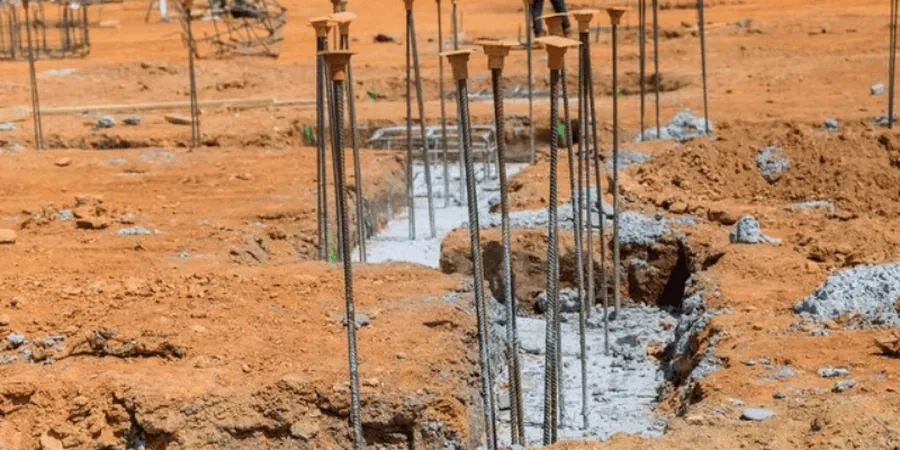
One soil layer can change required pile depth by 40 percent. Test before you drive.
Process overview
- Unit weight and moisture content per ASTM D2216
- Peak and residual friction angles from direct shear
- Unconfined compressive strength for cohesive strata
- Modulus of subgrade reaction for lateral pile response
Local context
Boise sits at an elevation of 2,730 feet above sea level. The city experienced a magnitude 6.9 earthquake in 1884 near the Mount Borah fault zone. Since then, the fault has remained active. Pile foundation design in Boise must consider liquefaction potential in saturated sandy layers. Loose silty sands under the water table can lose strength during shaking. We evaluate cyclic resistance using SPT blow counts and fines content. If liquefaction is possible, deep piles must extend through the liquefiable zone into dense strata or bedrock. Skipping this step risks differential settlement during a seismic event.
Reference standards
IBC 2021 Chapter 18 – Soils and Foundations, ASCE 7-22 – Minimum Design Loads for Buildings, ASTM D3966 – Lateral Load Testing of Piles, ACI 543R – Design, Manufacture, and Installation of Concrete Piles
Additional services
SPT Borings and Sampling
Standard Penetration Test borings every 1.5 meters to obtain N-values and recover split-spoon samples for classification.
Consolidation Testing
One-dimensional consolidation tests to determine preconsolidation stress and compression index for settlement estimates.
Triaxial Compression (CU and CD)
Consolidated undrained and drained triaxial tests to measure effective stress strength parameters for deep foundation design.
Lateral Load Test Setup
Field lateral load testing per ASTM D3966 to verify pile deflection and moment capacity under design loads.
Typical parameters
Quick answers
What is the difference between end-bearing and friction piles?
End-bearing piles transfer load through the tip to a strong layer like bedrock or dense gravel. Friction piles rely on skin friction along the shaft to carry the load. Boise's geology often requires a combination of both.
How deep do piles typically go in the Boise area?
Depths vary widely. In the alluvial plain near the river, piles may reach 15–25 meters to find competent material. On the bench areas, shallower depths of 6–12 meters are common where basalt is near the surface.
Can pile foundation design in Boise account for seismic lateral spreading?
Yes. We evaluate potential lateral spreading using liquefaction analysis and slope stability methods. Piles must be designed to resist the additional lateral loads from spreading soil without excessive deflection.
What is the typical cost range for a pile foundation design study in Boise?
The cost for a complete geotechnical investigation with pile design parameters ranges from US$1,560 to US$5,530 depending on the number of borings and complexity of the soil profile.