The contrast between Boise’s North End, with its deep alluvial soils, and the newer developments on the Boise Foothills is stark. In the foothills, many lots are carved from slopes and then leveled using fill — sometimes compacted, sometimes not. That creates a real challenge for foundations. A home built on uncompacted fill in the Foothills can settle several inches within the first few years, while a structure on native alluvium near the Boise River barely moves. That’s why foundations on fill analysis is non-negotiable for any project on man-made ground, whether it’s a single-family home or a commercial strip. The difference between a good fill and a bad one determines long-term stability. Before pouring a single slab, we recommend a study of collapsible soils to identify hidden risk in fills that look stable on the surface.
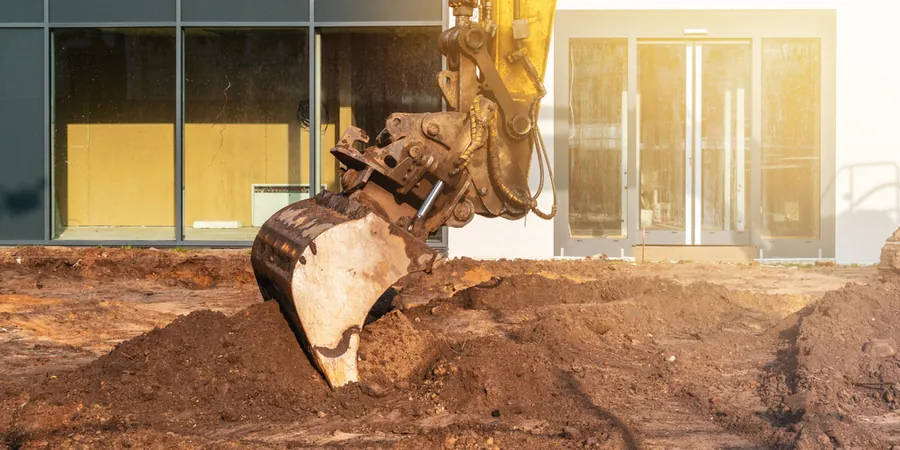
The 2021 IBC requires fills to meet 95% of standard Proctor density for granular soils — but moisture control in Boise’s semi-arid climate is the real challenge.
Process overview
- Maximum dry density and optimum moisture content (ASTM D698)
- Collapse potential from double-oedometer tests
- Settlement magnitude and rate using consolidation curves
- Shear strength of fill material for bearing capacity
Local context
A mistake we see often: a contractor brings in fill from a nearby excavation, spreads it, and only compacts the top layer before pouring the foundation. The fill below stays loose. Within a year, the slab cracks, doors jam, and the owner is looking at underpinning costs that could have been avoided. The risk isn’t just settlement — it’s differential settlement. One corner of the house sits on fill, the other on native soil, and the structure twists. That’s where a proper foundations on fill analysis prevents a mess. Without it, you’re gambling with the building’s structural integrity.
Reference standards
IBC 2021 (Section 1806 — Presumptive Load-Bearing Values of Soils), ASCE 7-22 (Chapter 12 — Seismic Design Requirements), ASTM D698 (Standard Proctor Compaction), ASTM D5333 (Collapse Potential of Soils)
Additional services
Compaction Control Testing
Field density tests using sand cone or nuclear gauge, plus laboratory Proctor curves to verify that fill meets IBC density requirements before foundation placement.
Collapse Potential Assessment
Double-oedometer and single-oedometer consolidation tests to measure collapse potential under wetted conditions, critical for Boise’s low-plasticity fills.
Settlement Analysis & Recommendations
Settlement magnitude and rate calculations using consolidation theory, with recommendations for preloading, dynamic compaction, or deep foundations when fill quality is poor.
Typical parameters
Quick answers
What is the difference between compacted fill and uncontrolled fill for foundations?
Compacted fill is placed in thin lifts (typically 8 to 12 inches) and mechanically compacted to a specified density — usually 95% of standard Proctor. Uncontrolled fill is dumped and spread without systematic compaction. Foundations on uncontrolled fill can settle several inches, especially when wetted, while properly compacted fill behaves more like native soil.
How much does a foundations on fill analysis cost in Boise?
For a typical single-family lot with one test pit and laboratory consolidation tests, the cost ranges from US$920 to US$2,150 depending on the number of tests and site accessibility. Larger commercial projects with multiple borings and settlement modeling fall at the higher end.
Can I build on fill without any soil testing?
Technically yes, but it is high risk. The 2021 IBC requires that fills used for structural support be tested to confirm compaction and bearing capacity. Without testing, the foundation may settle unevenly, leading to cracking, structural damage, and costly repairs. Most lenders and building departments in Boise require a geotechnical report for new construction on fill.