In Boise, many times we see projects built on the Boise River alluvium or the older terrace deposits that look similar but behave very differently under load. A Standard Penetration Test is the quickest way to tell them apart. We run the SPT according to ASTM D1586, recording blow counts every 6 inches and collecting split-spoon samples for lab classification. It gives you a direct read on density or consistency. When we need a continuous profile of soil resistance without recovering a sample, we often combine this with a cone penetration test on the same borehole to cross-check stratigraphy.
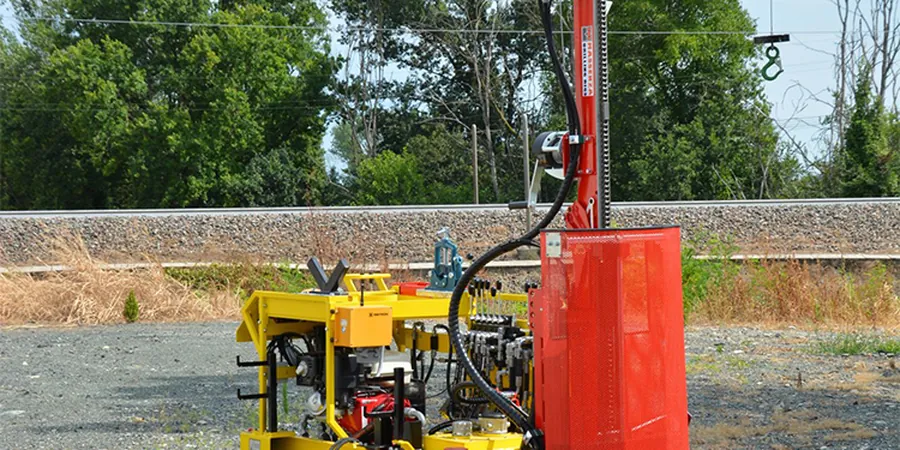
A single SPT blow count can distinguish between loose sands susceptible to liquefaction and dense gravels that support heavy column loads without issue.
Process overview
- Advance the boring to the test depth with a clean hole.
- Seat the sampler 6 inches, then record blows for the next 12 inches.
- Retrieve the barrel, seal the sample, and log the refusal criteria.
Local context
A common mistake we see in Boise is contractors assuming the entire Valley floor has the same bearing capacity. They skip the SPT on a site with old river channels, then the slab cracks from differential settlement. Without blow counts, you cannot estimate relative density in sands or consistency in clays. That leads to over-designed footings or, worse, under-designed ones. We always recommend at least one SPT per major foundation element to avoid surprises during excavation.
Reference standards
ASTM D1586-18 Standard Test Method for Standard Penetration Test (SPT), ASTM D2487-17 Standard Practice for Classification of Soils for Engineering Purposes (Unified Soil Classification System), ASCE 7-22 Minimum Design Loads and Associated Criteria for Buildings and Other Structures
Additional services
Standard SPT with Split-Spoon Sampling
Full ASTM D1586 execution including hammer calibration, blow count recording, and sealed sample delivery to our lab for moisture content and classification.
SPT with Energy Measurement
For projects requiring high accuracy, we add a strain gauge and accelerometer on the rod to measure actual hammer energy transfer ratio (ETR) and correct N60 values.
SPT in Gravelly Soils
When the cone tip hits cobbles or gravel, we switch to a solid cone (60-degree tip) per ASTM D1586 annex to avoid sampler damage and still get a penetration resistance.
SPT for Liquefaction Assessment
We run SPT borings paired with undisturbed sampling to evaluate cyclic resistance ratio (CRR) using the Youd-Idriss method, essential for sites near the Boise River.
Typical parameters
Quick answers
What is the difference between N-SPT and corrected N60?
N-SPT is the raw blow count measured in the field. N60 corrects that value for hammer efficiency, rod length, borehole diameter, and sampler type, giving a more consistent input for design correlations like bearing capacity or relative density.
How many SPT borings do I need for a commercial building in Boise?
The IBC requires at least one boring per 2,500 sq ft of building footprint, but local geotechnical practice in Boise often recommends one boring per 1,500 sq ft due to variable alluvial deposits. Your structural engineer can refine this based on load and risk.
What is the typical cost range for an SPT test in Boise?
The usual cost for a single SPT boring with sampling and basic lab tests in Boise falls between US$600 and US$850 per boring, depending on depth, access conditions, and number of samples tested.
Can SPT detect groundwater?
Yes. While the SPT itself does not measure water pressure, we record the water level in the borehole before, during, and after drilling. If water enters the hole during the test, we note it on the log. For precise piezometric levels, we install a standpipe piezometer after the boring.
What does a low N-value mean for my foundation?
An N-value below 4 in sands indicates very loose conditions, and below 2 in clays indicates very soft consistency. Both suggest low bearing capacity and high potential for settlement. You may need deep foundations, soil improvement, or a mat foundation designed for differential movement.