A common mistake contractors make in Boise is assuming the ground is uniform across the Treasure Valley. The city sits on a complex alluvial fan system with the Boise River cutting through basalt flows. Builders who skip a proper soil mechanics study often find differential settlement cracking slab foundations within two years. The Idaho Geological Survey notes that collapsible soils and shallow groundwater in the Bench area require site-specific characterization. Before pouring concrete, a thorough investigation combining test pits and Standard Penetration Testing should be done to define the actual bearing strata. Many local structural engineers now require a full laboratory consolidation test for any commercial project over two stories to predict long-term settlement under load.
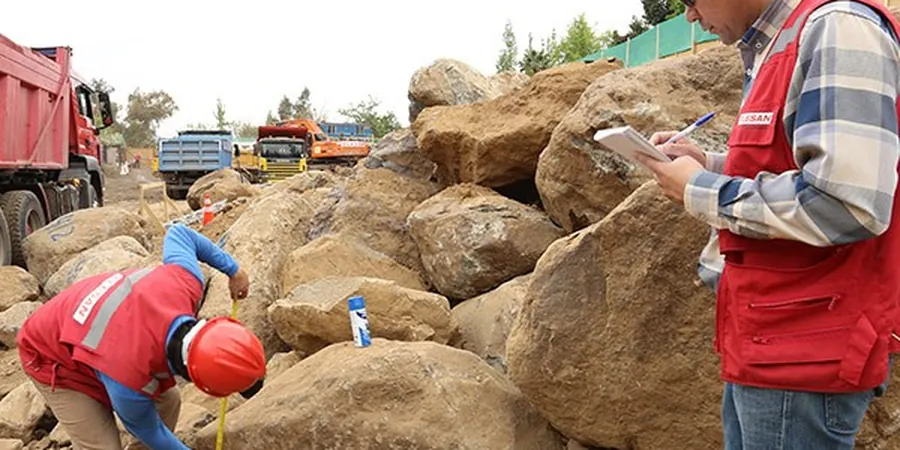
Collapsible loess on Boise's West Bench can settle up to 10% in volume after saturation, a risk that only a targeted soil mechanics study can quantify.
Process overview
Local context
Boise has grown rapidly since the 1990s, pushing development onto the Foothills and former agricultural floodplains. The historical filling of old river channels created variable fill thicknesses. Without a soil mechanics study, a builder risks activating a settlement trough beneath a rigid foundation. Seismic site class also shifts from C to D within a few blocks near the river. The Idaho Department of Transportation has documented pavement failures in subdivisions built without proper subgrade characterization. A targeted study identifies these transition zones before they cause structural damage.
Reference standards
ASTM D2487-17 (Unified Soil Classification), ASTM D1586-18 (Standard Penetration Test), ASCE 7-16 (Minimum Design Loads, Site Class), ASTM D5333-03 (Collapse Potential of Soils), IBC 2018 – Chapter 18 (Soils and Foundations)
Additional services
Field Exploration & Sampling
Boreholes with SPT, hand augers for shallow silt, and undisturbed tube sampling for collapsible soil testing. Includes groundwater monitoring and pocket penetrometer readings.
Laboratory Classification & Strength Testing
Atterberg limits, grain size distribution, Proctor compaction, and direct shear or triaxial compression. All tests follow ASTM procedures with ISO 17025-accredited protocols.
Geotechnical Analysis & Reporting
Foundation recommendations, bearing capacity, settlement estimates, seismic site classification per ASCE 7, and collapsible soil mitigation strategies tailored to the project location.
Typical parameters
Quick answers
How much does a soil mechanics study in Boise typically cost?
For a standard residential lot in Ada County, the cost ranges between US$3,260 and US$5,520 depending on the number of borings and lab tests required. Commercial projects with deeper investigation and seismic analysis fall at the higher end.
What is the difference between N-SPT and bearing capacity in Boise soils?
N-SPT measures the resistance to driving a split-spoon sampler, giving a blow count that correlates with relative density. Bearing capacity is the calculated allowable load for a foundation. In Boise's silty sands, a blow count of 15 to 20 typically corresponds to an allowable bearing pressure of 150 to 200 kPa, but collapsible soils require separate collapse testing.
Which zones of Boise have the most problematic soils?
The West Bench and Foothills areas contain deep loess deposits with collapse potential. The Greenbelt corridor near the Boise River has high water tables and soft compressible clays. The old landfill zones near the airport require gas monitoring and differential settlement analysis. Each zone demands a distinct testing approach.
How long does a complete soil mechanics study take for a Boise project?
Field drilling and sampling typically take one to two days for a single-family lot. Lab testing adds one to two weeks. The final report with foundation recommendations is delivered within three weeks from the start of fieldwork. Expedited services are available for urgent projects.