A commercial lot off Fairview Avenue needed infiltration testing for a stormwater detention system. The soil profile showed silty sands with cobbles, common in the Boise foothills. Without reliable permeability data, the drainage design risked oversizing or failure. We deployed a double-ring infiltrometer to measure field-saturated hydraulic conductivity directly. This method isolates vertical flow and reduces lateral seepage errors. Before starting, we also ran a suelos colapsibles assessment to check for sudden settlement under wetting, which is a known issue in the area's alluvial fans. The test results gave the civil team clear infiltration rates to size their basins correctly.
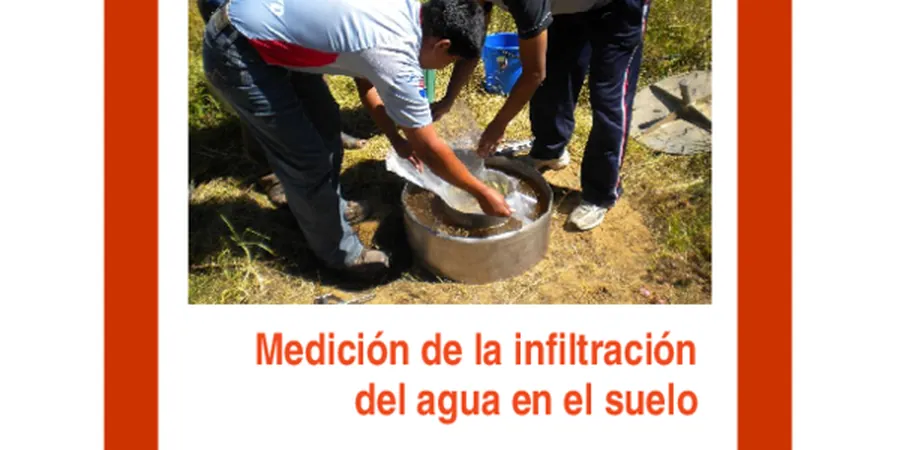
Double-ring infiltrometry isolates vertical flow, giving designers reliable Ksat values for stormwater basins and septic drain fields in Boise's varied soils.
Process overview
- Saturated hydraulic conductivity (Ksat) in cm/s or in/hr
- Infiltration rate at steady-state flow
- Time to reach equilibrium
- Soil texture and compaction effects
Local context
Boise sits at an elevation of 2,730 feet along the Boise River, where the valley floor transitions to sagebrush-covered slopes. The soil here is a patchwork of alluvial deposits, lacustrine clays, and colluvial fans. Infiltration rates can vary by an order of magnitude within a single block. A parking lot near the airport required double-ring tests because the native silty clay had low permeability; without accurate data, the retention pond would have overflowed after the first heavy rain. Getting the infiltration test wrong means either undersized drainage or costly rework. That is why we run multiple test locations across each site to capture spatial variability.
Reference standards
ASTM D3385-18 – Standard Test Method for Infiltration Rate of Soils in Field Using Double-Ring Infiltrometer, ASTM D5092 – Standard Practice for Design and Installation of Groundwater Monitoring Wells, Idaho DEQ Stormwater Management Guidelines
Additional services
Double-Ring Infiltrometer Test
Standard field test with inner/outer rings, constant head, and continuous logging. Ideal for stormwater basins, infiltration trenches, and bioretention cells. Report includes steady-state Ksat and time-to-equilibrium.
Porchet Borehole Infiltration Test
Single-ring borehole method for shallow soils or confined access areas. Used for septic system design and small-scale drainage. Quick setup with reliable results for sandy to silty soils.
Permeameter Testing in Test Pits
Combined test pit excavation and in-situ permeameter readings. Suitable for heterogeneous soils where block samples are needed. We log soil stratigraphy and conduct multiple point tests per pit.
Typical parameters
Quick answers
How long does an infiltration test take on a typical Boise site?
A double-ring infiltrometer test usually takes 3 to 5 hours per location, including setup, saturation, and steady-state measurement. Porchet borehole tests are faster, around 1 to 2 hours. Multiple test points across the site can be completed in one day.
What is the cost range for an infiltration test in Boise?
The cost for a standard double-ring infiltrometer test in Boise ranges from US$290 to US$380 per test location. Porchet borehole tests are slightly lower. The final price depends on site access, number of test points, and reporting requirements.
When should I choose a double-ring infiltrometer instead of a Porchet test?
Use the double-ring method for stormwater BMP sizing and when lateral flow must be minimized. The outer ring buffers the inner measurement zone. Porchet is better for shallow exploration or when the water table is near the surface.
Do infiltration tests work in Boise's clay-rich soils?
Yes, but they require longer saturation times. Clays have low hydraulic conductivity, so the test may run several hours before reaching steady state. We use the double-ring method to reduce edge effects and get reliable Ksat values even in tight soils.